

Thanh bên bài viết

 CC BY 4.0
Truy cập mở
CC BY 4.0
Truy cập mở
Được sao chép, phân phối lại và chỉnh sửa bài báo, với điều kiện:
-
Ghi nguồn tác giả và bài báo gốc
© 2026 Tạp chí Khoa học và Công nghệ nhiệt đới
Graphene-based Materials for Environmental Remediation: A Comprehensive Review
Nội dung chính của bài viết
Tóm tắt
Graphene-based materials have emerged as a versatile and powerful class of functional materials for environmental remediation due to their exceptional physicochemical properties and structural tunability. This comprehensive review critically summarizes recent advances in the synthesis, properties, and environmental applications of graphene and its derivatives, including graphene oxide, reduced graphene oxide, graphene nanoplatelets, and graphene-based composites. Emphasis is placed on elucidating the structure-property-performance relationships governing key remediation pathways, including adsorption, photocatalysis, and advanced oxidation processes. The roles of different synthesis routes, surface functionalization strategies, and rational composite design in enhancing pollutant-removal efficiency are systematically analyzed. Particular attention is given to graphene-enabled mechanisms for removing heavy metals, organic pollutants, and emerging contaminants from water and wastewater, highlighting synergistic effects arising from adsorption-catalysis coupling and enhanced charge-transfer behavior. In addition, recent progress in green synthesis approaches, magnetic and three-dimensional graphene architectures, and hybrid systems with metal oxides or metal-organic frameworks is discussed in the context of sustainability and practical applicability. Despite significant achievements, challenges related to material aggregation, scalability, cost, regeneration, and environmental safety remain barriers to large-scale implementation. This review concludes by identifying critical knowledge gaps and outlining future research directions to translate graphene-based remediation technologies from laboratory studies to real-world environmental applications. By providing an integrated and critical perspective, this work is intended to serve as a valuable reference for researchers and engineers developing next-generation graphene-based materials for sustainable environmental remediation.
Từ khóa
Adsorption, advanced oxidation processes, environmental remediation, graphene-based materials, photocatalysis
Chi tiết bài viết
Introduction
Rapid industrialization, urban expansion, and intensive agricultural activities have led to the continuous release of a wide range of pollutants into the environment, posing serious threats to ecosystems and human health. Contaminants such as heavy metals, dyes, pesticides, antibiotics, and persistent organic pollutants (POPs) are frequently detected in water, soil, and air, where they exhibit high toxicity, bioaccumulation potential, and resistance to natural degradation processes (Aziz et al., 2023; Devi, 2019; Oladimeji et al., 2024) Conventional environmental remediation technologies, including chemical precipitation, membrane separation, and biological treatment, often suffer from limitations such as low efficiency for recalcitrant pollutants, high operational costs, secondary pollution, and poor adaptability to complex environmental matrices (Singh et al., 2023; Worku et al., 2025). These challenges have driven intense research efforts to develop advanced materials capable of achieving efficient, sustainable, and scalable environmental remediation.
Among emerging functional materials, graphene-based materials have attracted extraordinary attention over the past decade due to their unique physicochemical properties (Chang & Wu, 2013; Perala et al., 2024). Graphene, a two-dimensional sp²-hybridized carbon network, and its derivatives, such as graphene oxide (GO), reduced graphene oxide (rGO), graphene nanoplatelet (GNPs), and graphene-based composites, exhibit exceptionally high specific surface area, rich surface chemistry, excellent electrical conductivity, mechanical robustness, and tunable electronic structures. These characteristics make graphene-based materials highly versatile platforms for environmental applications, enabling strong adsorption of pollutants, enhanced charge-transfer in photocatalytic systems, and synergistic interactions when integrated with metals, metal oxides, polymers (Anh et al., 2023; La et al., 2017; Nguyen et al., 2020; Tran et al., 2020; Tuan, 2018).
Significant progress has been reported in the use of graphene-based materials for environmental remediation, particularly in water and wastewater treatment. Graphene has demonstrated remarkable adsorption capacities for heavy metals and organic contaminants through mechanisms involving electrostatic attraction, π-π interactions, complexation, and hydrogen bonding (Auta et al., 2026; Li et al., 2024; Rahdar et al., 2025). Meanwhile, graphene-based composites have been widely employed to enhance photocatalytic degradation, advanced oxidation processes, and electrochemical remediation by promoting light absorption, suppressing electron-hole recombination, and facilitating the generation of reactive species. Despite these advances, the rapidly expanding literature remains fragmented, with variations in material design, synthesis routes, performance metrics, and mechanistic interpretations, making it difficult to draw systematic conclusions or identify clear pathways toward practical implementation. Several review articles have addressed specific aspects of graphene-based environmental applications; however, many focus narrowly on individual processes, pollutant classes, or material types. A comprehensive and integrative assessment that connects synthesis strategies, structure-property relationships, remediation mechanisms, performance evaluation, sustainability considerations, and future challenges is still needed. In particular, critical issues such as green synthesis routes, material stability and recyclability, environmental safety, scalability, and real-world applicability require deeper and more coherent discussion.
This review provides a comprehensive overview of graphene-based materials for environmental remediation. It systematically summarizes recent advances in material synthesis and functionalization, elucidates key mechanisms governing adsorption and catalytic processes, compares performance across different pollutant categories, and critically discusses current challenges and future perspectives. By offering an integrated framework that bridges fundamental science and practical application, this review seeks to guide the rational design of next-generation graphene-based materials and to support their transition from laboratory research to sustainable environmental remediation technologies. This review is structured as follows: Section 2 covers the fundamentals of graphene; Section 3 details synthesis and functionalization strategies; Section 4 provides an in-depth analysis of graphene-based materials in adsorption, photocatalysis, and advanced oxidation processes; and Section 5 concludes with key challenges and future directions.
Fundamentals of graphene
Structure and Properties of Graphene
Graphene is a two-dimensional carbon nanomaterial composed of a single layer of sp²-hybridized carbon atoms arranged in a hexagonal honeycomb lattice. This unique atomic structure gives rise to a delocalized π-electron system, endowing graphene with exceptional electronic, mechanical, thermal, and chemical properties. As the fundamental building block of other carbon allotropes, such as graphite, carbon nanotubes, and fullerenes, graphene exhibits intrinsic characteristics that are particularly advantageous for environmental remediation, including high surface area, strong chemical stability, and tunable surface chemistry (Wang & Shi, 2015). Structurally, pristine graphene consists of a defect-free basal plane with strong C-C covalent bonds and minimal surface functional groups. Theoretical specific surface area values can reach up to ~2630 m² g⁻¹, providing abundant active sites for interaction with contaminants (Khalil et al., 2026). In practice, graphene is often obtained as few-layer sheets or graphene nanoplatelets (GNPs), in which multiple graphene layers are stacked by weak van der Waals interactions (Nag et al., 2022). Such layered structures retain many of the desirable properties of monolayer graphene while offering improved mechanical robustness and processability. Importantly, controlled exfoliation techniques can yield GNPs with lateral dimensions of several micrometers and thicknesses of only a few to tens of nanometers, which are well-suited for composite formation and large-scale applications. For example, XRD patterns of the GNPs exhibit a broad peak at ~26.5°, much weaker and broader than that of graphite, indicating a less ordered interlayer structure consistent with SEM observations. TEM images further confirm that the GNPs consist of few-layer graphene with wrinkled, corrugated, and partially scrolled morphologies, as evidenced by their semitransparency. XPS analysis reveals a dominant C-C bonding peak at 284.5 eV with negligible oxidized carbon species, confirming the high purity of the as-fabricated GNPs (Figure 1) (La et al., 2016a).
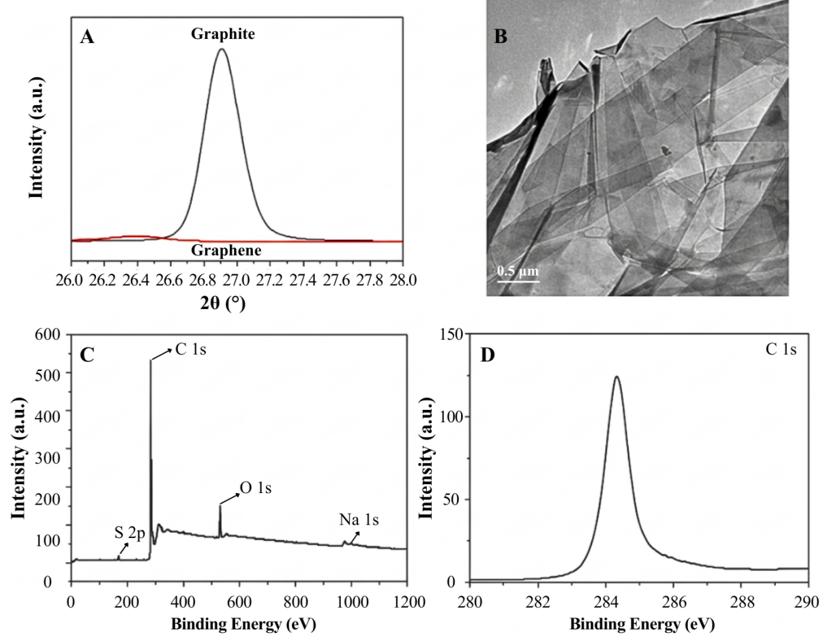
Figure 1. XRD pattern of graphite flakes (Black) and graphene nanoplatelets (Red) (A), TEM image of GNPs (B), and XPS spectra of GNPs: survey scan (C) and C 1s (D) Reproduced from (La et al., 2016) with permission from Wiley
The electronic properties of graphene are governed by its zero band-gap semimetallic nature and exceptionally high charge-carrier mobility (Avouris, 2010; Tang et al., 2011). These features facilitate rapid electron transport across the graphene plane, making graphene an excellent electron acceptor and conductive scaffold when integrated with semiconductors or redox-active species. In environmental systems, such electronic behavior is critical for enhancing interfacial charge transfer, suppressing recombination of photogenerated carriers, and promoting redox reactions involved in pollutant degradation. From a mechanical perspective, graphene exhibits extraordinary strength and flexibility, with a Young’s modulus of approximately 1 TPa and high fracture resistance. These properties contribute to the structural stability of graphene-based membranes, aerogels, and composite adsorbents during repeated adsorption-desorption or catalytic cycles (La et al., 2019; Liu et al., 2024; Nguyen et al., 2024). Thermally, graphene exhibits excellent electrical and thermal conductivity and stability, enabling operation under a wide range of environmental conditions without significant structural degradation. Surface chemistry is another key factor governing graphene’s environmental functionality. While pristine graphene is largely hydrophobic and chemically inert, defects, edges, and residual heteroatoms introduced during synthesis can significantly alter its surface reactivity. In particular, graphene oxide (GO) contains abundant oxygen-containing functional groups, such as hydroxyl, epoxy, carbonyl, and carboxyl moieties, which impart hydrophilicity and strong affinity toward metal ions and polar organic molecules. Reduced graphene oxide (rGO), obtained by partial removal of these oxygen functionalities, offers a balance between conductivity and surface reactivity, making it highly attractive for catalytic and electrochemical applications. Defects and wrinkles, often considered imperfections, can also play beneficial roles in environmental remediation. Structural defects increase surface energy and create localized active sites that enhance adsorption and catalysis. Wrinkled and crumpled morphologies further hinder restacking of graphene layers, thereby improving the accessibility of active surfaces in aqueous systems. SEM images confirm the formation of GNPs, showing that exfoliated graphene nanoplatelets exhibit a consistent crumpled and wrinkled morphology with lateral sizes of 10-50 µm and semitransparent few-layer stacks (<10-40 layers), in clear contrast to the thick, compact structure of graphite flakes (Figure 2) (La et al., 2016a).
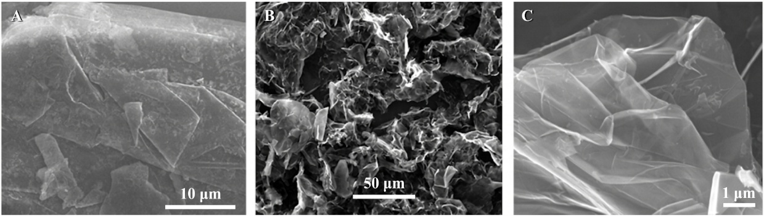
Figure 2. SEM images of natural graphite flakes (A), GNPs (B, C) Reproduced from (La et al., 2016) with permission from Wiley
The exceptional combination of structural integrity, electronic conductivity, mechanical robustness, and tunable surface chemistry makes graphene a uniquely versatile material. Understanding the relationship between graphene’s structure and its physicochemical properties is essential for the rational design of graphene-based materials tailored to adsorption, photocatalysis, and advanced oxidation processes in environmental remediation.
Advantages and Limitations in Environmental Applications
Graphene-based materials offer a unique combination of physicochemical properties that make them highly attractive for environmental remediation applications. One of the most significant advantages of graphene is its exceptionally high specific surface area, which provides abundant active sites for the adsorption of a wide range of contaminants, including heavy metals, dyes, pharmaceuticals, and persistent organic pollutants. The extended π-conjugated structure of graphene enables strong π-π interactions with aromatic organic molecules, while surface functional groups, particularly in graphene oxide (GO) and reduced graphene oxide (rGO), facilitate electrostatic attraction, hydrogen bonding, and surface complexation. These features often result in fast adsorption kinetics and high removal efficiencies even at low pollutant concentrations. Another key advantage lies in graphene's excellent electrical conductivity and charge-carrier mobility. When incorporated into catalytic or photocatalytic systems, graphene acts as an efficient electron mediator, promoting rapid interfacial charge transfer and suppressing electron-hole recombination. This property significantly enhances the performance of graphene-based composites in photocatalysis, advanced oxidation processes, and electrochemical remediation. In addition, graphene serves as a robust support material that improves the dispersion and stability of metal nanoparticles, metal oxides, and metal-organic frameworks, thereby increasing the accessibility and durability of active sites. Graphene-based materials also exhibit high mechanical strength, flexibility, and chemical stability, which are critical for long-term environmental applications (Asim et al., 2022; Auta et al., 2026; Singh et al., 2025). These properties enable the fabrication of diverse architectures, such as membranes, aerogels, hydrogels, and beads, that can be readily integrated into filtration, adsorption, and catalytic systems. Moreover, the tunability of graphene’s surface chemistry through functionalization, heteroatom doping, or composite formation allows selective targeting of specific pollutants and adaptation to different environmental conditions (Tee et al., 2023). This versatility positions graphene as a multifunctional platform that couples adsorption with catalytic degradation to achieve synergistically improved remediation efficiency.
Despite these compelling advantages, several limitations hinder the widespread practical implementation of graphene-based materials in environmental applications. One major challenge is the tendency of graphene sheets to aggregate or restack due to strong π-π interactions and van der Waals forces (Luo et al., 2013). Such aggregation reduces the accessible surface area and active sites, thereby diminishing adsorption and catalytic performance. Although composite design and three-dimensional structuring can alleviate this issue, these approaches often increase the complexity of material synthesis and processing. Economic and scalability concerns also remain significant barriers. High-quality graphene production, particularly via chemical vapor deposition or controlled exfoliation, can be costly and energy-intensive. While solution-based and green synthesis routes have made progress toward large-scale production, achieving consistent quality at low cost remains challenging. In addition, the recovery and regeneration of graphene-based materials from treated water can be difficult, especially for nanoscale sheets, raising concerns about material loss and secondary contamination (Abioye et al., 2024). Environmental and health risks associated with graphene-based materials require careful consideration. The potential toxicity, persistence, and bioaccumulation of graphene and its derivatives in aquatic and terrestrial ecosystems remain incompletely understood. Furthermore, under harsh oxidative or photocatalytic conditions, graphene may undergo structural degradation or surface oxidation, which can alter performance and generate byproducts with uncertain environmental impacts.
Beyond performance considerations, increasing attention has been directed toward the potential environmental and health risks associated with graphene-based materials. Recent studies suggest that graphene and its derivatives may induce toxicity through multiple mechanisms, including the generation of reactive oxygen species (ROS), which can lead to oxidative stress, lipid peroxidation, and damage to cellular membranes and biomolecules. The sharp edges and high surface reactivity of graphene sheets may also physically disrupt cell membranes, thereby further contributing to cytotoxicity. In addition, factors such as particle size, surface functionalization, oxidation state, and aggregation behavior strongly influence biocompatibility and environmental fate. Concerns have also been raised regarding the potential bioaccumulation and persistence of graphene-based materials in aquatic and terrestrial ecosystems. These findings highlight the importance of integrating toxicity evaluation and environmental safety considerations into the design and application of graphene-based remediation systems.
Graphene-based materials encompass a diverse family of structures, including pristine graphene, graphene oxide (GO), reduced graphene oxide (rGO), and graphene nanoplatelets (GNPs), each exhibiting distinct physicochemical properties and environmental behaviors. Therefore, treating these materials as equivalent may lead to oversimplified or misleading conclusions. For instance, GO is highly hydrophilic and rich in oxygen-containing functional groups, favoring adsorption and dispersion in aqueous systems, whereas rGO and GNPs possess higher electrical conductivity and are more suitable for catalytic and electrochemical applications. Similarly, although π–π interactions play an important role in the adsorption of aromatic organic compounds, they should not be overemphasized, as electrostatic attraction, hydrogen bonding, and surface complexation can also significantly contribute depending on the pollutant and solution conditions. Graphene-based materials offer significant opportunities for advanced environmental remediation owing to their high efficiency, multifunctionality, and tunability. However, challenges related to aggregation, cost, scalability, recovery, and environmental safety must be addressed through rational material design, life-cycle assessment, and standardized performance evaluation.
Balancing these advantages and limitations will be crucial for translating graphene-based technologies from laboratory research to sustainable real-world environmental applications. Addressing these limitations requires precise control over material fabrication, which is the focus of the following section on synthesis and functionalization strategies.
Synthesis and functionalization strategies
Synthesis Routes
The synthesis route plays a decisive role in determining the structural quality, surface chemistry, scalability, and environmental suitability of graphene-based materials for remediation applications. Over the past two decades, a variety of synthesis strategies have been developed and can be broadly classified as top-down and bottom-up approaches. Each route offers distinct advantages and limitations with respect to material quality, cost, yield, and environmental footprint, thereby influencing the practical applicability of graphene in environmental systems.
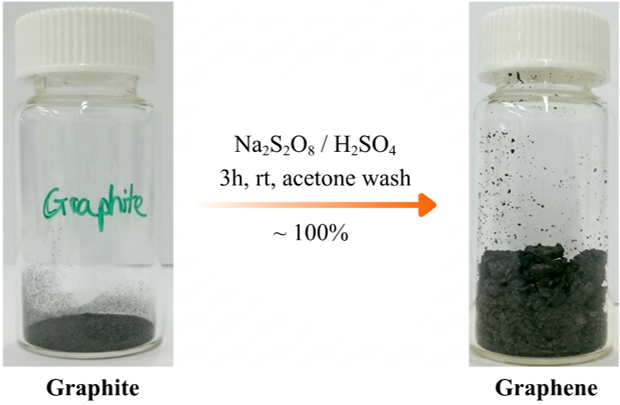
Figure 3. Synthetic route of the graphene nanoplatelets from natural graphite. Reproduced from (La et al., 2016) with permission from Wiley
The use of sodium persulfate (Na₂S₂O₈) in concentrated H₂SO₄ (Figure 3) does not directly constitute a full oxidation route for graphene formation but rather serves as an intercalation- and pre-treatment-assisting step that facilitates the weakening of interlayer van der Waals interactions in graphite (La et al., 2016a). The generation of graphene nanoplatelets (GNPs) in this approach is primarily governed by subsequent exfoliation processes, which separate expanded graphite into few-layer sheets while largely preserving the sp² carbon framework. This mechanism is fundamentally different from classical oxidation routes, such as the Hummers method, in which extensive oxidation introduces abundant oxygen-containing functional groups and forms graphene oxide (GO). Therefore, the Na₂S₂O₈-assisted method should be more accurately classified as an exfoliation-assisted strategy rather than a true oxidation pathway, yielding graphene materials with relatively low defect density and properties favorable for adsorption and charge-transfer-related environmental applications.
Top-down approaches are the most widely used methods for producing graphene and its derivatives at laboratory and pilot scales. Mechanical exfoliation, originally employed to isolate single-layer graphene from graphite, yields high-quality and defect-free graphene sheets (La et al., 2016a; Nguyen et al., 2018). However, this method is inherently low-yield and unsuitable for large-scale environmental applications. Liquid-phase exfoliation, involving sonication or shear mixing of graphite in suitable solvents, offers a more scalable alternative. Preservation of the sp² carbon network makes the resulting graphene particularly suitable for adsorption applications dominated by π–π interactions. This approach produces few-layer graphene and graphene nanoplatelets with relatively preserved sp² networks, making them attractive for adsorption and catalytic applications. Nevertheless, solvent selection, energy consumption, and control over layer thickness remain key challenges. Chemical oxidation-reduction routes represent the most common synthesis pathway for graphene oxide (GO) and reduced graphene oxide (rGO). These materials are particularly relevant for adsorption and composite fabrication due to the presence of oxygen-containing functional groups, while CVD-derived graphene is associated with electrochemical and membrane-based applications owing to its high crystallinity and conductivity. In this method, graphite is oxidized using strong oxidants to produce GO, which contains abundant oxygenated functional groups and exhibits excellent dispersibility in water. These features are particularly advantageous for adsorption-based remediation and composite fabrication. Subsequent chemical, thermal, or electrochemical reduction of GO yields rGO, partially restoring electrical conductivity while retaining surface functionality. A simple method was employed to synthesize graphene nanoplatelets and few-layer graphene in quantitative yield with flake sizes of tens of micrometers by treating natural graphite flakes with Na₂S₂O₈ in concentrated H₂SO₄ to facilitate intercalation and subsequent exfoliation in concentrated sulfuric acid with sodium persulfate, followed by filtration, washing, and drying (La et al., 2016a). Despite their versatility, oxidation-reduction routes introduce structural defects and residual impurities that may adversely affect electronic properties and long-term stability. Bottom-up approaches, such as chemical vapor deposition (CVD) and epitaxial growth, enable the synthesis of high-quality, large-area graphene with precise control over thickness and crystallinity (Saeed et al., 2020; Zhang et al., 2013). CVD-grown graphene exhibits superior electrical and mechanical properties, making it ideal for membrane-based separations and electrochemical remediation systems. However, the requirement for high temperatures, metal substrates, and complex transfer processes significantly limits scalability and increases production costs, restricting its use in large-volume environmental applications. In response to sustainability concerns, increasing attention has been devoted to green and low-impact synthesis routes. Electrochemical exfoliation of graphite in benign electrolytes provides a rapid, scalable, and environmentally friendly method for producing graphene with controllable oxidation levels. Similarly, biomass-assisted and bio-inspired synthesis approaches that use plant extracts, agricultural waste, or biopolymers as reducing or stabilizing agents have emerged as promising alternatives. These methods reduce reliance on toxic chemicals and align with circular economy principles, making them particularly appealing for environmental remediation technologies.
Oxidation methods, such as the widely used Hummers method, involve chemical oxidation of graphite to produce graphene oxide (GO), which contains abundant oxygen-containing functional groups, significantly altering the sp² carbon framework. In contrast, exfoliation-based approaches primarily aim to separate graphite into few-layer graphene while preserving the intrinsic sp² structure. In this context, Na₂S₂O₈-assisted treatment in concentrated H₂SO₄ should not be considered a true oxidation route, but rather an intercalation and exfoliation-facilitating step that weakens interlayer interactions and promotes subsequent layer separation.
The choice of synthesis route must balance material performance with scalability, cost, and environmental impact. For environmental remediation, solution-based, green, and composite-oriented synthesis strategies are generally favored, as they provide sufficient material quality while enabling large-scale production. Future research should focus on developing standardized, energy-efficient, and environmentally benign synthesis routes that ensure consistent material properties and facilitate the transition of graphene-based materials from laboratory studies to real-world remediation systems.
Composite Design
The design of graphene-based composites plays a pivotal role in translating graphene's intrinsic properties into practical environmental remediation performance. While pristine graphene offers exceptional electrical conductivity, mechanical strength, and a large theoretical surface area, its strong π-π stacking tendency and limited surface functionality often limit its direct applicability. Composite design strategies, therefore, aim to overcome these limitations by integrating graphene or its derivatives (graphene oxide, reduced graphene oxide, graphene nanoplatelets) with functional inorganic or organic components to achieve synergistic effects.
A widely adopted approach involves coupling graphene with metal oxides such as TiO₂, Fe₂O₃, ZnO, MnO₂, and Fe₃O₄ (La et al., 2017; Nguyen et al., 2024; Truong Ngoc et al., 2018). EDS mapping (Figure 4) confirmed the uniform distribution of Fe, Mg, Cu, and O on the graphene surface, and elemental analysis indicated a Fe₂O₃-MgO-CuO ternary oxide composition (La et al., 2017). In these composites, graphene acts as a conductive support and dispersing scaffold, preventing nanoparticle agglomeration while enhancing charge transport and interfacial contact. This architecture is particularly effective in photocatalytic and redox-driven remediation systems, where graphene facilitates electron migration from photoexcited semiconductors, suppresses electron-hole recombination, and prolongs the lifetime of reactive species. At the same time, metal oxides contribute specific adsorption sites, redox activity, or light-harvesting capability, resulting in performance superior to that of individual components. Beyond binary systems, ternary and multicomponent composites have emerged as an effective strategy to tailor multifunctionality. For example, graphene-based composites incorporating multiple metal oxides or metal-oxide-metal junctions can simultaneously address adsorption capacity, catalytic activity, and magnetic recoverability. Magnetic graphene composites based on Fe₃O₄ or ferrite phases are particularly attractive for water treatment, as they combine high pollutant uptake with rapid post-treatment separation using an external magnetic field. Such designs improve material recyclability and reduce the risk of secondary contamination. Another important class of graphene composites involves hybridization with porous materials such as metal-organic frameworks (MOFs), layered double hydroxides (LDHs), and porous carbons. In these systems, graphene provides a conductive and mechanically robust backbone, while the porous phase offers high surface area and tunable pore chemistry. MOF-graphene composites, for instance, benefit from the well-defined adsorption sites and catalytic metal centers of MOFs, while graphene enhances structural stability and charge-transfer efficiency (Adegoke & Tseki, 2025; Rad et al., 2022; Zhang et al., 2022). This synergistic integration enables simultaneous adsorption and catalytic degradation of organic pollutants, addressing the limitations of single-mechanism remediation approaches. Surface functionalization is a key design parameter across all graphene composites. Oxygen-containing groups, heteroatom doping (N, S, P), and defect engineering significantly influence interfacial interactions between graphene and guest components, as well as between the composite and target pollutants. Rational control of these features allows selective enhancement of electrostatic attraction, π-π interactions, hydrogen bonding, or redox activity, depending on the remediation objective. Importantly, composite design must balance functionality with structural accessibility to avoid pore blockage or excessive surface coverage that can hinder mass transfer.
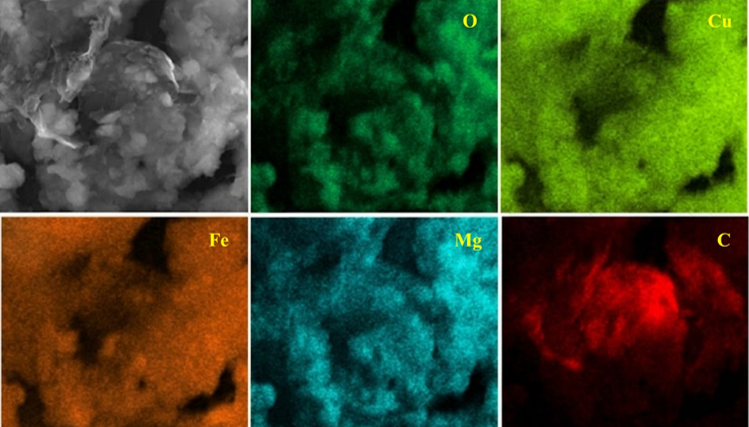
Figure 4. Energy-dispersive X-ray spectroscopy (EDS) mapping of the graphene@Fe-Mg-Cu ternary oxides composite Reproduced from (La et al., 2017) with permission from Wiley
A facile surfactant-assisted self-assembly method was developed to fabricate well-dispersed TCPP nanorods on graphene nanoplatelets (GNPs), with uniform morphology (~50 nm diameter, ~250 nm length) confirmed by SEM and TEM. The resulting hybrid material exhibits enhanced visible-light photocatalytic activity for Rhodamine B degradation compared to free TCPP nanorods, and a corresponding photodegradation mechanism was proposed (La et al., 2016b). A nanostructured graphene@TiO₂@porphyrin composite was fabricated via surfactant-assisted self-assembly and characterized by UV-Vis, fluorescence spectroscopy, SEM, XRD, and FTIR, revealing well-dispersed TiO₂ nanoparticles (15-30 nm) and porphyrin nanorods on the graphene surface. The composite exhibits enhanced photocatalytic degradation of Rhodamine B under both UV and visible light due to synergistic activation of TiO₂ and porphyrin, and a corresponding mechanism was proposed (La et al., 2017). A bioinspired three-dimensional electrode was fabricated by covalently pillaring graphene oxide with ABQA, inspired by benzoquinone and adenine, to enhance surface reactivity and structural stability. The resulting material exhibits a robust, conductive architecture with improved electrochemical properties, making it suitable for high-performance supercapacitor applications (Biradar et al., 2023).
Despite notable progress, challenges remain in achieving reproducible, scalable, and environmentally benign composite architectures. Future composite design should emphasise green synthetic routes, structural robustness in realistic aqueous matrices, and clear structure-property-performance correlations. Overall, rational composite design represents a central strategy for unlocking the full potential of graphene-based materials in environmental remediation applications.
Graphene-based nanomaterials for environmental remediation
Adsorption of heavy metals and organic pollutants
Graphene-based materials have been extensively investigated as advanced adsorbents for the removal of heavy metals and organic pollutants owing to their exceptionally high specific surface area, tunable surface chemistry, and unique π-conjugated structure. Pristine graphene, graphene oxide (GO), reduced graphene oxide (rGO), graphene nanoplatelets (GNPs), and graphene-based composites provide abundant active sites for contaminant binding, enabling efficient interactions with a wide spectrum of pollutants in aqueous environments. Compared with conventional adsorbents such as activated carbon or mineral oxides, graphene-based materials often exhibit faster adsorption kinetics and higher adsorption capacities, particularly for low-concentration and recalcitrant contaminants.
For heavy metal remediation, graphene-based adsorbents exhibit strong affinity for toxic ions such as Pb²⁺, Cd²⁺, Hg²⁺, Cr(VI), As(III/V), and Fe³⁺ (La et al., 2017; Tran et al., 2020). The adsorption mechanisms are generally governed by a combination of electrostatic attraction, surface complexation, ion exchange, and coordination with oxygen-containing functional groups (-COOH, -OH, -O-) present on GO and functionalized graphene surfaces. Solution pH plays a critical role in controlling both metal speciation and the adsorbent's surface charge. At moderately acidic to neutral pH, deprotonation of surface functional groups enhances metal uptake through inner-sphere complexation, whereas at higher pH, adsorption may be further promoted by increased electrostatic attraction, provided that metal hydroxide precipitation is avoided. Incorporation of graphene into metal oxides or ferrite-based adsorbents increases surface area and porosity and improves dispersion of active phases, resulting in synergistically enhanced adsorption performance and facile recovery, especially in magnetic graphene composites.
Graphene-based materials are equally effective at adsorbing organic pollutants, including dyes, pesticides, antibiotics, phenolic compounds, and persistent organic pollutants (POPs) (Nguyen et al., 2024). Aromatic organic molecules interact strongly with the π-electron-rich graphene surface via π-π stacking, which is often the dominant adsorption pathway for dyes and chlorinated aromatics. Additional contributions from hydrogen bonding, hydrophobic interactions, and electrostatic forces further enhance adsorption, particularly when surface functionalization is carefully tailored. Three-dimensional graphene structures, such as aerogels and hydrogels, are gaining interest because they feature interconnected tiny pores, are lightweight, and offer numerous easy-to-reach adsorption sites. For example, graphene-based magnetic aerogels have shown excellent adsorption capacities for chlorophenoxy herbicides (Nguyen et al., 2024), combining strong molecular interactions with convenient magnetic separation and reusability.
Hybridization of graphene with metal oxides, polymers, or biomass-derived carbons is an effective strategy to overcome graphene's tendency to aggregate and to improve adsorption selectivity and stability. Such composites benefit from complementary functionalities: graphene provides a conductive and high-surface-area scaffold, while the secondary components introduce specific binding sites or structural robustness. Adsorption data for both heavy metals and organic pollutants are frequently well described by the Langmuir or the Freundlich isotherm models, indicating monolayer adsorption on homogeneous sites or multilayer adsorption on heterogeneous surfaces, respectively. Kinetic studies often follow pseudo-second-order models, suggesting that chemisorption processes play a significant role.
Despite the promising adsorption performance, several challenges remain for practical application, including regeneration efficiency, long-term stability, and performance in complex real wastewater matrices. However, the flexibility of graphene-based materials, along with the smart design of their surface and structure, makes them highly effective adsorbents for removing both heavy metals and organic pollutants from environmental systems.
Table 1 highlights the variability in adsorption performance among conventional and graphene-based materials. Activated carbon exhibits a high capacity for tetracycline (327.87 mg g⁻¹) and, especially, phenol (up to 1,021.14 mg g⁻¹), confirming its strong adsorption potential for organic pollutants. Zeolites show moderate to low capacities depending on the pollutant, reflecting their limited affinity for certain organics. In contrast, graphene-based materials such as GNPs and Fe₃O₄/graphene aerogels demonstrate competitive performance with added advantages of multifunctionality and easier recovery. While their capacities may not always exceed the best conventional adsorbents, graphene composites offer improved versatility, faster kinetics, and potential coupling with catalytic processes, making them promising candidates for advanced water treatment applications.
Table 1. Comparison of adsorption capacities of graphene-based materials and conventional adsorbents for the removal of various pollutants from aqueous systems
No | Materials | Pollutants | Capacity (mg g⁻¹) | Ref. |
1 | Activated carbon | Tetracycline | 327.87 | (Sanni et al., 2024) |
2 | Activated carbon derived from non-woody | Phenol and methylene blue | 1,021.14 and 85.2 | (Thithai et al., 2025) |
3 | Granular activated charcoal | Chlorpropham | 44.316 | (Alsehli, 2020) |
4 | Nano-NaX zeolite | Pb(II), Cu(II), and Co(II) ions | 461.61, 144.9, and 125.3 | (Ansari et al., 2015) |
5 | Natural Jordanian zeolite | Paracetamol | 8.051 | (Al-rimawi et al., 2019) |
6 | GNPs | Mazut oil and Ethylene glycol | 61.358 and 50.356 | (La et al., 2019) |
7 | Fe3O4/graphene aerogel | 2,4-dichlorophenoxyacetic acid | 42.918 | (Nguyen, et al., 2024) |
Compared with conventional adsorbents such as activated carbon, biochar, and metal oxides, and emerging materials such as metal-organic frameworks (MOFs), graphene-based composites exhibit several distinctive advantages and certain limitations. Graphene composites generally offer faster adsorption kinetics and higher affinity toward aromatic organic pollutants due to strong π–π interactions and tunable surface functionalities, while also enabling synergistic adsorption-catalysis coupling when integrated with metal oxides or functional phases. In contrast, traditional activated carbon and biochar are more cost-effective, widely available, and easier to scale, but often exhibit lower selectivity and limited functionality without further modification. MOFs, on the other hand, offer exceptionally high surface areas and well-defined pore structures, enabling superior adsorption capacities for specific contaminants; however, they may suffer from poor water stability and higher synthesis costs. Despite their high performance, graphene-based composites are still challenged by aggregation, relatively high production costs, and difficulties in recovery and regeneration. Therefore, while graphene composites represent a highly efficient and versatile class of adsorbents, their practical application requires careful optimization to balance performance, stability, and economic feasibility.
Photocatalytic Systems
Graphene-based materials have emerged as highly effective components in photocatalytic systems for environmental remediation, owing to their unique electronic structure, large specific surface area, and excellent charge transport properties. When integrated with semiconductor photocatalysts, graphene and its derivatives, such as graphene oxide (GO), reduced graphene oxide (rGO), and graphene nanoplatelets (GNPs), play multifunctional roles, substantially enhancing photocatalytic performance under ultraviolet, visible, and simulated solar irradiation.
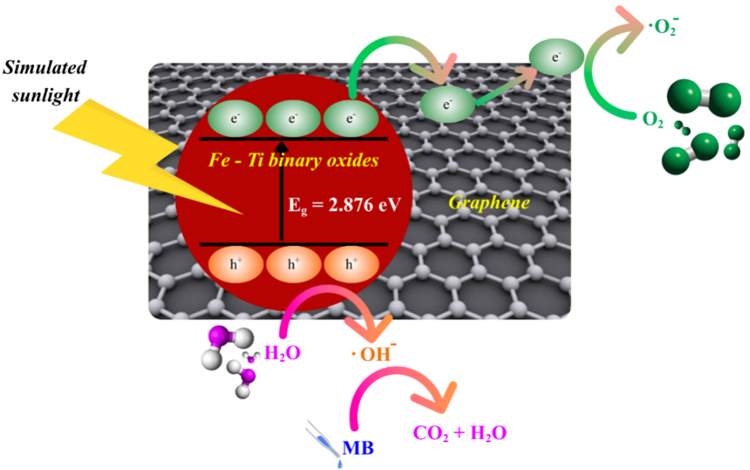
Figure 5. Proposed photocatalytic mechanism of MB degradation catalyzed by graphene@Fe-Ti binary oxide Reproduced from (Truong et al., 2020) with permission from Elsevier
Graphene itself is not a semiconductor and does not generate electron-hole pairs under light irradiation. Instead, its primary function in photocatalytic systems is to act as an electron sink and conductive pathway, facilitating efficient charge separation and transport. The enhancement mechanism is strongly governed by interfacial electronic interactions, particularly Fermi level alignment between graphene and the coupled semiconductor, which drives the transfer of photogenerated electrons from the semiconductor to graphene. In many systems, this interaction leads to the formation of Schottky-like junctions at the interface, enabling directional electron flow and suppressing charge recombination. Moreover, in more advanced architectures such as Z-scheme or S-scheme heterojunctions, graphene can serve as a solid-state electron mediator, promoting selective charge transfer while preserving strong redox potentials of the active components (Patel et al., 2026). These mechanisms collectively show that graphene's role is not as a photoactive material but as a highly efficient charge-transfer platform that enhances photocatalytic performance through interfacial electron management.
A primary advantage of graphene in photocatalytic systems is its ability to serve as an efficient electron acceptor and transporter. Upon photoexcitation of a semiconductor (e.g., TiO₂, Fe₂O₃, ZnO, or WO₃), photogenerated electrons can be rapidly transferred from the conduction band of the semiconductor to graphene sheets (Nguyen et al., 2024; Truong et al., 2020). This process suppresses electron-hole recombination, prolongs charge-carrier lifetimes, and increases the availability of reactive species such as •OH and •O₂⁻ for pollutant degradation (Figure 5). As a result, graphene-modified photocatalysts often exhibit significantly higher degradation rates for organic dyes, pharmaceuticals, pesticides, and other persistent organic pollutants compared with their pristine counterparts. Graphene-based heterojunction photocatalysts are among the most extensively studied configurations. In these systems, graphene serves as a conductive bridge between different semiconductors or between a semiconductor and a co-catalyst, facilitating interfacial charge transfer. Composites such as graphene/Fe₂O₃-TiO₂, TiO₂/GNPs, and Ti-Fe mixed oxides supported on graphene have demonstrated broadened light absorption into the visible region due to band-gap narrowing or interfacial electronic interactions (Heltina et al., 2023; Truong et al., 2020; Tuan, 2018). The formation of such heterostructures not only improves light harvesting but also enables more efficient carrier separation through favourable band alignment. Beyond metal oxides, graphene has been widely combined with metal-organic frameworks (MOFs) to construct hybrid photocatalytic systems. MOF-graphene composites benefit from the high porosity and tunable active sites of MOFs, together with the excellent electrical conductivity of graphene (Anh et al., 2023; Nguyen et al., 2020). In these systems, graphene enhances electron mobility and structural stability, while MOFs provide abundant adsorption sites and photoactive metal centers. Importantly, many MOF-graphene composites exhibit dual functionality, where adsorption concentrates pollutants near active sites, and photocatalysis subsequently drives their degradation, resulting in synergistically improved remediation efficiency under solar light. Three-dimensional graphene-based architectures, such as aerogels and hydrogels, further expand the applicability of photocatalytic systems (Shen et al., 2015; Zhang et al., 2024). Their interconnected porous networks facilitate mass transfer, improve light penetration, and enable easy recovery and reuse of the photocatalyst. When decorated with semiconductor nanoparticles, these 3D graphene frameworks provide a high density of exposed active sites while maintaining structural integrity during repeated photocatalytic cycles.
Despite these promising advances, several challenges remain for graphene-based photocatalytic systems. These include controlling graphene loading to avoid light shielding effects, ensuring strong interfacial bonding between graphene and photocatalysts, and maintaining long-term stability under irradiation. Moreover, most studies are still conducted under idealized laboratory conditions using model pollutants. Future research should emphasize scalable synthesis, green fabrication routes, and performance evaluation in complex real wastewater matrices. Overall, graphene-based photocatalytic systems represent a versatile and powerful platform for next-generation environmental remediation technologies, particularly when rational material design is guided by structure-property-performance relationships.
In comparison, graphene/metal oxide composites and graphene/MOF-based systems exhibit distinct advantages and limitations depending on the targeted application. Graphene/metal oxide composites (e.g., TiO₂, ZnO, Fe₂O₃) are generally characterized by excellent structural stability, chemical robustness, and scalability, making them more suitable for large-scale and long-term environmental applications. These systems benefit from well-established synthesis methods and strong resistance to photocorrosion; however, many metal oxides suffer from limited visible-light absorption and rapid charge recombination if not properly engineered. In contrast, graphene/MOF composites offer exceptionally high surface area, tunable pore structures, and adjustable chemical functionality, enabling superior adsorption–photocatalysis coupling and enhanced performance toward specific pollutants. Nevertheless, MOF-based systems often face challenges related to structural stability, particularly in aqueous environments, as well as higher synthesis complexity and cost. Therefore, while graphene/metal oxide composites are advantageous for robust and scalable applications, graphene/MOF systems are more suitable for high-efficiency, selective pollutant removal under controlled conditions, highlighting the importance of material selection based on practical requirements.
Despite the numerous studies reporting high adsorption and catalytic performance of graphene-based materials, significant inconsistencies persist across the literature. Reported adsorption capacities (q_max) and reaction efficiencies often vary widely, even for similar materials and target pollutants. These discrepancies are largely due to differences in experimental conditions, including solution pH, initial pollutant concentration, presence of competing ions, temperature, and synthesis methods, which influence surface chemistry and porosity. Moreover, kinetic and isotherm models are not always applied consistently, making direct comparison difficult. In addition, conflicting findings have been reported regarding the environmental safety and toxicity of graphene-based materials, with some studies indicating low toxicity and others suggesting potential risks depending on particle size, oxidation state, and exposure pathways. These inconsistencies highlight the need for standardized testing protocols, systematic comparative studies, and more rigorous reporting to ensure reliable evaluation and meaningful comparison of material performance.
Advanced Oxidation Processes
Advanced oxidation processes (AOPs) represent a powerful class of treatment technologies for the removal of refractory organic pollutants through the in situ generation of highly reactive species, such as hydroxyl radicals (•OH), sulfate radicals (SO₄•⁻), superoxide radicals (•O₂⁻), and other reactive oxygen species (ROS). In recent years, graphene-based materials have been increasingly incorporated into AOP systems to overcome intrinsic limitations of conventional catalysts, including poor electron transfer, low stability, and rapid deactivation. Owing to their exceptional electrical conductivity, large surface area, and tunable surface chemistry, graphene and its derivatives play multiple synergistic roles in enhancing radical generation, pollutant adsorption, and overall oxidation efficiency.
One of the most widely investigated graphene-assisted AOPs is the Fenton and Fenton-like oxidation process. Traditional homogeneous Fenton systems exhibit narrow optimal pH ranges, iron sludge formation, and limited reusability. By immobilizing iron species on graphene-based supports, heterogeneous Fenton-like catalysts have been developed that exhibit improved stability and catalytic efficiency. Graphene facilitates rapid electron transfer between Fe²⁺/Fe³⁺ redox couples, thereby accelerating H₂O₂ activation and sustaining continuous •OH production. In addition, the high surface area of graphene promotes the dispersion of iron nanoparticles and suppresses aggregation, thereby increasing the density of accessible active sites. These effects collectively enhance degradation rates for dyes, pharmaceuticals, and other persistent organic pollutants under mild reaction conditions.
Nano zero-valent iron (nZVI)-graphene composites represent a particularly effective class of graphene-based AOP catalysts (Ha et al., 2025). nZVI is well known for its strong reducing power and ability to activate oxidants; however, its practical application is limited by rapid oxidation and particle agglomeration. Integration with graphene nanoplatelets or graphene sheets significantly improves nZVI dispersion and stability, while simultaneously enhancing electron transport and ROS generation. Green-synthesized nZVI/graphene nanocomposites have demonstrated excellent performance in the oxidative degradation of organic dyes, achieving high removal efficiencies within short reaction times owing to synergistic redox reactions and enhanced production of reactive oxygen species. Importantly, graphene not only serves as a support but also actively participates in interfacial electron transfer, thereby facilitating continuous catalytic cycles.
Beyond Fenton-based systems, graphene-based materials have been widely explored in sulfate-radical-based AOPs, particularly those involving peroxymonosulfate (PMS) and persulfate (PS) activation. Graphene and reduced graphene oxide can directly activate PMS through surface-mediated electron transfer, generating SO₄•⁻ and •OH radicals even in the absence of transition metals. When combined with metal oxides, single metals, or bimetallic systems, graphene further enhances PMS activation by modulating the electronic structure of active sites and promoting rapid redox cycling. These systems often exhibit broader pH applicability and higher selectivity for target pollutants than conventional Fenton chemistry. Electrochemical and photo-assisted AOPs also benefit substantially from graphene integration. In electro-Fenton and photo-Fenton systems, graphene improves electrical conductivity and light-induced charge separation, leading to higher ROS yields and reduced energy consumption. Moreover, graphene's strong adsorption affinity for aromatic and hydrophobic pollutants increases local contaminant concentrations near reactive sites, thereby coupling adsorption with oxidation to accelerate degradation.
Despite the clear advantages, challenges remain for graphene-based AOPs, including catalyst deactivation by surface fouling, potential graphene oxidation under harsh oxidative conditions, and the need for scalable, low-cost synthesis routes. Future research should focus on structure-activity relationships, environmentally benign fabrication methods, and long-term performance evaluation in complex real wastewater matrices. Overall, graphene-based AOP systems offer a highly promising pathway for next-generation environmental remediation, combining high efficiency, versatility, and greater sustainability than conventional oxidation technologies.
Compared with conventional AOP catalysts such as metal oxides (e.g., Fe₂O₃, MnO₂), homogeneous Fenton systems, and emerging materials such as metal–organic frameworks (MOFs) and single-atom catalysts, graphene-based composites offer several distinctive advantages. Graphene composites provide enhanced electron transfer, improved dispersion of active sites, and strong adsorption of pollutants, which collectively promote more efficient generation and utilization of reactive oxygen species. In contrast, traditional homogeneous Fenton systems are simple and highly reactive but suffer from narrow pH ranges and sludge generation, while metal oxide catalysts are more stable but often limited by slower electron transfer and lower catalytic efficiency. MOF-based and single-atom catalysts offer high activity and tunable active sites; however, they may face challenges related to structural stability, leaching of active species, and higher synthesis complexity. Despite their superior performance, graphene-based AOP systems are still limited by potential material oxidation under harsh conditions, aggregation issues, and scalability concerns. Therefore, graphene composites represent a promising bridge between high efficiency and multifunctionality, but their practical application requires further optimization to ensure durability, cost-effectiveness, and environmental safety.
Challenges and roadmap for practical implementation
Despite substantial progress in graphene-based environmental remediation, translating laboratory-scale performance into practical treatment technologies remains challenging. Scalability and cost are major barriers. High-quality graphene production, particularly through chemical vapor deposition, remains energy-intensive and expensive, while solution-based and green synthesis routes may suffer from batch-to-batch variability. Future development should therefore prioritize low-cost, reproducible, and environmentally benign production methods, including electrochemical exfoliation and biomass-assisted approaches, together with scalable fabrication of graphene-based composites and macroscopic structures.
Material recovery and reuse represent another critical requirement for practical implementation. Dispersed nanoscale graphene is difficult to separate from treated water and may cause material loss or secondary contamination. Magnetic functionalization and immobilization within membranes, beads, aerogels, hydrogels, or three-dimensional monoliths can facilitate recovery while maintaining accessible active sites. Future studies should evaluate regeneration efficiency, structural integrity, activity retention, and performance over multiple operating cycles rather than relying primarily on initial removal efficiency.
The toxicity and environmental impacts of graphene-based materials also require systematic assessment. Their biological effects depend strongly on material type, lateral dimensions, oxidation state, surface functionality, aggregation behavior, and exposure conditions. Potential mechanisms include ROS-induced oxidative stress, membrane disruption, and interactions with cellular components, while their persistence, transformation, and potential bioaccumulation in aquatic and terrestrial environments remain incompletely understood. Comprehensive ecotoxicological testing and life-cycle assessment are therefore necessary to ensure that remediation benefits are not offset by unintended environmental risks.
A further limitation is the absence of standardized performance assessment procedures. Reported adsorption capacities, degradation efficiencies, kinetics, regeneration performance, and catalytic stability often come from substantially different experimental conditions, limiting meaningful comparison among materials. Standardized protocols should specify relevant parameters such as pollutant concentration, pH, adsorbent or catalyst dosage, water chemistry, reaction time, irradiation conditions, regeneration procedures, and long-term stability. Testing should increasingly progress from model solutions to real wastewater and continuous-flow systems, including fixed-bed reactors, membrane units, and hybrid adsorption-catalysis processes.
Accordingly, the roadmap toward practical implementation should integrate scalable and sustainable synthesis, recoverable material architectures, rigorous environmental safety assessment, and standardized performance validation. Pilot-scale and continuous-flow studies under realistic operating conditions will be particularly important for evaluating hydraulic behavior, long-term stability, regeneration, and treatment effectiveness. Integrating these considerations with materials science, environmental engineering, toxicology, and process design will provide a more reliable pathway to translate graphene-based remediation technologies from laboratory demonstrations to practical environmental applications.
Conclusions and outlook
Graphene-based materials have emerged as highly promising candidates for advanced environmental remediation due to their unique combination of high surface area, tunable surface chemistry, excellent electrical conductivity, and structural robustness. This review systematically summarized recent progress in the synthesis and functionalization of graphene and its derivatives, highlighting the critical influence of synthesis routes and composite design on material performance. Particular emphasis was placed on the structure-property-performance relationships governing key remediation pathways, including adsorption, photocatalysis, and advanced oxidation processes.
Across these applications, graphene and its derivatives enhance pollutant removal through complementary mechanisms, including surface complexation, electrostatic interactions, hydrogen bonding, π-π interactions, interfacial charge transfer, and improved dispersion of active catalytic phases. Integration with metal oxides, porous frameworks, and other functional components further broadens the applicability of graphene-based systems by combining adsorption, catalytic activity, and charge-transport functions within a single material platform.
Overall, the reviewed studies demonstrate that graphene-based materials can provide multifunctional and highly adaptable solutions for removing heavy metals, organic pollutants, and emerging contaminants. Continued progress in understanding interfacial mechanisms and establishing clearer structure-property relationships will be important for guiding the rational design of next-generation graphene-based materials for environmental remediation.
Funding: This project was funded by the Joint Vietnam-Russia Tropical Science and Technology Research Center under the project "Compilation of a monograph on 'Graphene - a new generation material for sustainable environmental and energy development'" (Project Code: MN.N2.10/25).
Data Availability Statement: No data were generated or analyzed in this review.
Author contributions: Nguyen Thi Hoai Phuong: Conceptualization, Methodology, Investigation, Data curation, Writing - original draft, Writing - review & editing, Visualization, Supervision; La Duc Duong: Conceptualization, Methodology, Investigation, Writing - review & editing, Visualization; Tran Van Chinh: Investigation, Data curation, Visualization; Truong Ngoc Tuan: Conceptualization, Investigation, Data curation, Visualization; Nguyen Thi Thu Hang: Conceptualization, Investigation, Data curation; Cao Phuong Anh: Investigation, Data curation, Writing - original draft; Nguyen Dinh Duc: Conceptualization, Writing - review & editing, Supervision.
Statement on the Use of Generative AI: The authors declare that AI tools were used only for language editing/formatting, and not for generating scientific content. All data, analyses, and interpretations were performed and verified by the authors, who take full responsibility for the manuscript.
Conflict of interest statement: The authors have no conflict of interest.
Tài liệu tham khảo
Abioye, S. O., Majooni, Y., Moayedi, M., Rezvani, H., Kapadia, M., & Yousefi, N. (2024). Graphene-based nanomaterials for the removal of emerging contaminants of concern from water and their potential adaptation for point-of-use applications. Chemosphere, 355, 141728. https://doi.org/10.1016/j.chemosphere.2024.141728
Adegoke, K. A., & Tseki, P. F. (2025). Graphene-based metal-organic framework nanocomposites for CO2 reduction reactions. Carbon Capture Science & Technology, 100523. https://doi.org/10.1016/j.ccst.2025.100523
Al-rimawi, F., Daana, M., Khamis, M., Karaman, R., Khoury, H., & Qurie, M. (2019). Removal of selected pharmaceuticals from aqueous solutions using natural Jordanian zeolite. Arabian Journal for Science and Engineering, 44(1), 209-215. https://doi.org/10.1007/s13369-018-3406-9
Alsehli, B. R. (2020). A simple approach for determining the maximum sorption capacity of chlorpropham from aqueous solution onto granular activated charcoal. Processes, 8(4), 398. https://doi.org/10.3390/pr8040398
Anh, N. T. L., Ngo, V. D., Hang, T. T., Thiet, M. D., Duy, N. Q., Duong, L. D., & Phuong, N. T. H. (2023). Simultaneous adsorption-catalysis process for methylene blue removal using MOF-Fe/GNPs composites. Vietnam Journal of Catalysis and Adsorption, 12(3), 23-28. https://doi.org/10.51316/jca.2023.043
Ansari, M., Raisi, A., Aroujalian, A., Dabir, B., & Irani, M. (2015). Synthesis of nano-NaX zeolite by microwave heating method for removal of lead, copper, and cobalt ions from aqueous solution. Journal of Environmental Engineering, 141(5), 04014088. https://doi.org/10.1061/(ASCE)EE.1943-7870.0000919
Asim, N., Badiei, M., Samsudin, N. A., Mohammad, M., Razali, H., Soltani, S., & Amin, N. (2022). Application of graphene-based materials in developing sustainable infrastructure: An overview. Composites Part B: Engineering, 245, 110188. https://doi.org/10.1016/j.compositesb.2022.110188
Auta, M., Baba, I. A., Yahya, M. D., Abdulkareem, A. S., Iyaka, Y. A., Olutoye, M. A., Abdurahim, A. A., & Obayomi, K. S. (2026). Graphene-based materials for the treatment of contaminants in groundwater: A systematic review. FlatChem, 100999. https://doi.org/10.1016/j.flatc.2026.100999
Avouris, P. (2010). Graphene: electronic and photonic properties and devices. Nano Letters, 10(11), 4285-4294. https://doi.org/10.1021/nl102824h
Aziz, K. H. H., Mustafa, F. S., Omer, K. M., Hama, S., Hamarawf, R. F., & Rahman, K. O. (2023). Heavy metal pollution in the aquatic environment: efficient and low-cost removal approaches to eliminate their toxicity: a review. RSC Advances, 13(26), 17595-17610. https://doi.org/10.1039/d3ra00723e
Biradar, M. R., Rao, C. R., Bhosale, S. V., & Bhosale, S. V. (2023). Bio-inspired adenine-benzoquinone-adenine pillar grafted graphene oxide materials with excellent cycle stability for high energy and power density supercapacitor applications. Journal of Energy Storage, 58, 106399. https://doi.org/10.1016/j.est.2022.106399
Chang, H., & Wu, H. (2013). Graphene‐based nanomaterials: Synthesis, properties, and optical and optoelectronic applications. Advanced Functional Materials, 23(16), 1984-1997. https://doi.org/10.1002/adfm.201202460
Devi, N. L. (2019). Persistent organic pollutants (POPs): environmental risks, toxicological effects, and bioremediation for environmental safety and challenges for future research. In Bioremediation of Industrial Waste for Environmental Safety: Volume I: Industrial Waste and Its Management (pp. 53-76). Springer. https://doi.org/10.1007/978-981-13-1891-7_4
Ha, N. M., Kien, N. D., Yen, L. H., Trang, N. T., Chau, V. M., & Phuong, N. T. H. (2025). Green synthesis of nZVI/GNP nanocomposite as an oxidation catalyst for Rhodamine B degradation in aqueous medium. HaUI Journal of Science and Technology, 61(5B), 42-49. https://doi.org/10.57001/huih5804.2025.146
Heltina, D., Mastura, D. I., Amri, A., & Sembiring, M. P. (2023). Comparison of synthesis methods on TiO2-graphene composites for photodegradation of compound waste. Materials Today: Proceedings, 87, 293-298. https://doi.org/10.1016/j.matpr.2023.03.284
Khalil, A. M., Tabish, T. A., Joshi, B., Egiza, M., Memon, F. A., & Zhang, S. (2026). Graphene-based materials for water and wastewater treatment: A comprehensive review of advances in synthesis, emerging applications, and future directions. Carbon Trends, 100609. https://doi.org/10.1016/j.cartre.2026.100609
La, D. D., Bhargava, S., & Bhosale, S. V. (2016a). Improved and a simple approach for mass production of graphene nanoplatelets material. ChemistrySelect, 1(5), 949-952. https://doi.org/10.1002/slct.201600157
La, D. D., Rananaware, A., Salimimarand, M., & Bhosale, S. V. (2016b). Well–dispersed assembled porphyrin nanorods on graphene for the enhanced photocatalytic performance. ChemistrySelect, 1(15), 4430-4434. https://doi.org/10.1002/slct.201601001
La, D. D., Thi, H. P. N., Nguyen, T. A., & Bhosale, S. V. (2017). Effective removal of Pb (II) using a graphene@ ternary oxides composite as an adsorbent in aqueous media. New Journal of Chemistry, 41(23), 14627-14634. https://doi.org/10.1039/c7nj03064a
La, D. D., Nguyen, T. A., Nguyen, T. T., Ninh, H. D., Thi, H. P. N., Nguyen, T. T., Nguyen, D. A., Dang, T. D., Rene, E. R., & Chang, S. W. (2019). Absorption behavior of graphene nanoplates toward oils and organic solvents in contaminated water. Sustainability, 11(24), 7228. https://doi.org/10.3390/su11247228
Li, G., Du, R., Cao, Z., Li, C., Xue, J., Ma, X., & Wang, S. (2024). Research progress in graphene-based adsorbents for wastewater treatment: Preparation, adsorption properties and mechanisms for Inorganic and organic pollutants. C, 10(3), 78. https://doi.org/10.3390/c10030078
Liu, X., Jing, K., Peng, S., Shi, Q., & Liu, H. (2024). Facile preparation of graphene oxide-based composite aerogel to efficiently adsorb methylene blue. Colloids and Surfaces A: Physicochemical and Engineering Aspects, 681, 132754. https://doi.org/10.1016/j.colsurfa.2023.132754
Luo, J., Kim, J., & Huang, J. (2013). Material processing of chemically modified graphene: some challenges and solutions. Accounts of Chemical Research, 46(10), 2225-2234. https://doi.org/10.1021/ar300241v
Nag, A., Simorangkir, R. B., Gawade, D. R., Nuthalapati, S., Buckley, J. L., O'Flynn, B., & Mukhopadhyay, S. C. (2022). Graphene-based wearable temperature sensors: A review. Materials & Design, 221, 110971. https://doi.org/10.1016/j.matdes.2022.110971
Nguyen, P., Ha, D., Nguyen, T., La, D., & Cao, H. (2020). Study on MIL-100 (Fe)/GNPs composite process to treat wastewater of dyes. Vietnam Journal of Catalysis and Adsorption, 9(1), 95-99. https://doi.org/10.51316/jca.2020.015
Nguyen, T. A., Thi Tham, N., Nguyen Thi Hong, P., Bhosale, S. V., & La, D. D. (2018). Study on industrial-scale fabrication of graphene nanoplatelets (GNPs) from Natural Graphite. Materials Science Forum. Trans Tech Publications.
Nguyen, T. H. T., Nguyen, K. T., Le, B. H., Nghiem, X. T., La, D. D., Nguyen, D. K., & Nguyen, H. P. T. (2024). Synthesis of magnetic Fe₃O₄/graphene aerogel for the removal of 2,4-dichlorophenoxyacetic acid herbicide from water. RSC Advances, 14(31), 22304-22311. https://doi.org/10.1039/d4ra03567d
Oladimeji, T., Oyedemi, M., Emetere, M., Agboola, O., Adeoye, J., & Odunlami, O. (2024). Review on the impact of heavy metals from industrial wastewater effluent and removal technologies. Heliyon, 10(23), e40370. https://doi.org/10.1016/j.heliyon.2024.e40370
Patel, A. R., Fazal, A. D., Solanky, T. D., Dhibar, S., Kumar, S., & Panja, S. K. (2026). Recent advances and challenges in graphene-based nanomaterials for photocatalytic CO 2 reduction. Materials Advances. 7(1), 109–143. https://doi.org/10.1039/D5MA00750J
Perala, R. S., Chandrasekar, N., Balaji, R., Alexander, P. S., Humaidi, N. Z. N., & Hwang, M. T. (2024). A comprehensive review on graphene-based materials: From synthesis to contemporary sensor applications. Materials Science and Engineering: R: Reports, 159, 100805. https://doi.org/10.1016/j.mser.2024.100805
Rad, T. S., Khataee, A., Arefi-Oskoui, S., Rad, S. S., Orooji, Y., Gengec, E., & Kobya, M. (2022). Graphene-based ZnCr layered double hydroxide nanocomposites as bactericidal agents with high sonophotocatalytic performances for degradation of rifampicin. Chemosphere, 286, 131740. https://doi.org/10.1016/j.chemosphere.2021.131740
Rahdar, S., Dehghan, A., Davoudi, M., & Shams, M. (2025). Functionalized graphene oxide for Cr (VI) removal: A systematic review of functional groups, mechanisms, and environmental implications. Results in Engineering, 107385. https://doi.org/10.1016/j.rineng.2025.107385
Saeed, M., Alshammari, Y., Majeed, S. A., & Al-Nasrallah, E. (2020). Chemical vapour deposition of graphene-synthesis, characterisation, and applications: A review. Molecules, 25(17), 3856. https://doi.org/10.3390/molecules25173856
Sanni, S. O., Oluokun, O., Akpotu, S. O., Pholosi, A., & Pakade, V. E. (2024). Removal of tetracycline from the aquatic environment using activated carbon: A comparative study of adsorption performance based on the activator agents. Heliyon, 10(14). https://doi.org/10.1016/j.heliyon.2024.e34637
Shen, Y., Fang, Q., & Chen, B. (2015). Environmental applications of three-dimensional graphene-based macrostructures: adsorption, transformation, and detection. Environmental Science & Technology, 49(1), 67-84. https://doi.org/10.1021/es504268b
Singh, B. J., Chakraborty, A., & Sehgal, R. (2023). A systematic review of industrial wastewater management: Evaluating challenges and enablers. Journal of Environmental Management, 348, 119230. https://doi.org/10.1016/j.jenvman.2023.119230
Singh, H., Budiarto, H. A., Singh, B., Kumar, K., Gupta, R., Bhowmik, A., & Santhosh, A. J. (2025). Graphene for next-generation technologies: Advances in properties, applications, and industrial integration. Results in Engineering, 106865. https://doi.org/10.1016/j.rineng.2025.106865
Tang, K., Qin, R., Zhou, J., Qu, H., Zheng, J., Fei, R., Li, H., Zheng, Q., Gao, Z., & Lu, J. (2011). Electric-field-induced energy gap in few-layer graphene. The Journal of Physical Chemistry C, 115(19), 9458-9464. https://doi.org/10.1021/jp201761p
Tee, W. T., Loh, N. Y. L., Lai, K. C., Hiew, B. Y. Z., Gan, S., & Lee, L. Y. (2023). Application of 3D heteroatom-doped graphene in adsorptive removal of water pollutants: Review on hydrothermal synthesis and its influencing factors. Separation and Purification Technology, 320, 124072. https://doi.org/10.1016/j.seppur.2023.124072
Thithai, V., Gim, S.-M., Mearaj, S., & Choi, J. (2025). Adsorption kinetics and capacity of activated carbon derived from non-woody waste biomass for water remediation. International Journal of Environmental Science and Technology, 22(2), 693-706.
Tran, C. V., Quang, D. V., Nguyen Thi, H. P., Truong, T. N., & La, D. D. (2020). Effective removal of Pb (II) from aqueous media by a new design of Cu–Mg binary ferrite. ACS Omega, 5(13), 7298-7306. https://doi.org/10.1021/acsomega.9b04126
Truong Ngoc, T., Nguyen Thi, H. P., & Tran, V. C. (2018). Synthesis of TiO2 - graphene nanoplatelets (TiO2/GNPs) composite from ilmenite and natural graphite for photocatalysis in enviromental treatment. Journal of Military Science and Technology, 57(A), 106-111.
Truong, N. T., Thi, H. P. N., Ninh, H. D., Phung, X. T., Van Tran, C., Nguyen, T. T.,…Rene, E. R. (2020). Facile fabrication of graphene@ Fe-Ti binary oxide nanocomposite from ilmenite ore: An effective photocatalyst for dye degradation under visible light irradiation. Journal of Water Process Engineering, 37, 101474. https://doi.org/10.1016/j.jwpe.2020.101474
Truong, T., Nguyen, G., Nguyen, P., Phuong, H. H., Hong, P. N. T., Tran, L., & La, D. (2020). Study on the synthesis of graphene/Fe2O3-TiO2@ porphyrin hybrid composite and its application as photocatalyst for dyeing wastewater treatment. Vietnam Journal of Catalysis and Adsorption, 9(1), 8-14. https://doi.org/10.51316/jca.2020.002
Tuan, T. N. (2018). Synthesis and characterization of gnps/ti-fe binary oxide composite from ilminite of central viet nam using hydrothermal method. Vietnam Journal of Science and Technology, 56(2A), 1-10.
Wang, X., & Shi, G. (2015). An introduction to the chemistry of graphene. Physical Chemistry Chemical Physics, 17(43), 28484-28504. https://doi.org/10.1039/c5cp05212b
Worku, A. K., Ayele, D. W., Teshager, M. A., Omar, M., Yerkrang, P. P., Elgaddafi, R., & Alemu, M. A. (2025). Recent advances in wastewater treatment technologies: innovations and new insights. Energy Reviews, 4(4), 100164. https://doi.org/10.1016/j.enrev.2025.100164
Zhang, F., Liu, J., Hu, L., & Guo, C. (2024). Recent progress of three-dimensional graphene-based composites for photocatalysis. Gels, 10(10), 626. https://doi.org/10.3390/gels10100626
Zhang, M., Shan, Y., Kong, Q., & Pang, H. (2022). Applications of metal–organic framework-graphene composite materials in electrochemical energy storage. FlatChem, 32, 100332. https://doi.org/10.1016/j.flatc.2022.100332
Zhang, Y., Zhang, L., & Zhou, C. (2013). Review of chemical vapor deposition of graphene and related applications. Accounts of Chemical Research, 46(10), 2329-2339. https://doi.org/10.1021/ar300203n