

Thanh bên bài viết

 CC BY 4.0
Truy cập mở
CC BY 4.0
Truy cập mở
Được sao chép, phân phối lại và chỉnh sửa bài báo, với điều kiện:
-
Ghi nguồn tác giả và bài báo gốc
© 2026 Tạp chí Khoa học và Công nghệ nhiệt đới
Khảo sát tác nhân vi sinh vật gây bệnh và đặc điểm kháng kháng sinh của vi khuẩn phân lập trên quần áo đã qua sử dụng bán tại chợ Đông Tác, Đống Đa, Hà Nội
Nội dung chính của bài viết
Tóm tắt
Hiện nay, quần áo đã qua sử dụng được yêu thích rộng rãi do tính độc lạ và ưu điểm về giá cả. Tuy nhiên, các sản phẩm này có thể chứa các vi sinh vật gây bệnh có tác động tiềm ẩn tới sức khỏe cộng đồng. Bên cạnh đó, tình trạng kháng kháng sinh của các loài vi sinh vật trên các sản phẩm này cũng là mối lo ngại. Khảo sát nhằm mục đích xác định sự có mặt của một số căn nguyên quan trọng trong lâm sàng cũng như một số căn nguyên gây nhiễm trùng cơ hội và khảo sát tình trạng kháng kháng sinh của các chủng Staphylococcus aureus phân lập được tại chợ Đông Tác, Đống Đa, Hà Nội. Nghiên cứu mô tả cắt ngang trên 155 mẫu quần áo các loại bằng phương pháp nuôi cấy trực tiếp trên môi trường thạch dinh dưỡng và định danh bằng tính chất sinh hóa. Khảo sát tình trạng kháng kháng sinh và xác định MRSA bằng phương pháp khoanh giấy khuếch tán - Kirby-Bauer. Trong 155 mẫu quần áo được khảo sát có tới hơn 2/3 tổng số mẫu (n = 107) có chứa ít nhất một loài vi khuẩn hoặc nấm được phát hiện bằng phương pháp nuôi cấy. Trong đó, được ghi nhận nhiều nhất là chi Bacillus spp. với 56,1% (n = 87), tụ cầu vàng - Staphylococcus aureus chiếm 12,3% mẫu (n = 19). Nấm Mucor spp. được tìm thấy trên 9% mẫu (n = 14), Aspergillus spp.được tìm thấy trên 4,5% mẫu (n = 7), 3,2% (n = 5) Microsporum spp. và 1,3% mẫu (n = 2) phát hiện nấm Penicillin spp.. Khảo sát tình trạng kháng kháng sinh của 20 chủng vi khuẩn S. aureus (trên 19 mẫu quần áo) được phân lập cho thấy có 9 mẫu MRSA (Methicillin-resistant Staphylococcus aureus), các vi khuẩn S. aureus biểu hiện đa kháng với nhiều kháng sinh thông thường.
Abstract
Investigation of pathogenic microorrganisms and antimicrobial resistance patterns of bacteria isolated from secondhand clothes at Dong Tac Market, Dong Da, Ha Noi
Nowadays, secondhand clothes have gained widespread popularity due to its uniqueness and affordability. However, these products may harbor pathogenic microorganisms, posing potential risks to public health. Furthermore, the antimicrobial resistance status of microorganisms present a on these items is also a significant concern. This study aim to determine the presence of clinically significant pathogens and oppotunistic agents, as well as to investigate the antimicrobial resistance patterns of Staphylococcus aureus strains isolated at Dong Tac, Dong Da, Ha Noi. A cross-sectional study was conducted on 155 samples of various type of clothes using the direct culture method on nutrient agar, followed by identification based on biochemical characteristics. Antibiotic susceptibility testing and MRSA detection were performed using the Kirby-Bauer disk diffusion method. Among the 155 surveyed clothing samples, more than two-third (n = 107) were found to harbor at least one baterial or fungal species detected. Among these, Bacillus sp. was the most prevalent, accounting for 56,1% (n = 87), followed by Staphylococcus aureus at 12,3% (n = 19). Regarding fungi, Mucor sp. was found in 9% of samples (n = 14), Aspergillus sp. in 4,5% (n = 7), Microsporum sp. in 3,2% (n = 5) and Penicillium sp. in 1,3% (n = 2). The assessment of antibiotic resistance in 20 S. aureus strains (isolated from 19 clothing samples) identified 9 MRSA strains, the S. aureus isolates exhibited multidrug resistance to various common antibiotics.
Keywords: antibiotic; multidrug resistance; secondhand clothes.
Từ khóa
Đa kháng thuốc, kháng sinh, quần áo đã qua sử dụng
Chi tiết bài viết
Điểm nổi bật:
Khảo sát tỉ lệ vi khuẩn và vi nấm gây bệnh cơ hội trên quần áo đã qua sử dụng.
Báo cáo đầu tiên về tình trạng kháng kháng sinh của vi khuẩn Staphylococcus aureus và phát hiện MRSA trên quần áo đã qua sử dụng.
1. ĐẶT VẤN ĐỀ
Quần áo đã qua sử dụng hay còn gọi là “quần áo secondhand” - một trong những loại mặt hàng đã xuất hiện từ rất lâu và phổ biến trên toàn cầu nhờ giá thành thấp, tính độc đáo về kiểu dáng và xu hướng tiêu dùng bền vững. Tại Việt Nam, chợ đồ cũ như chợ Đông Tác (Đống Đa, Hà Nội) thu hút lượng lớn người mua ở mọi lứa tuổi, trong nước lẫn nước ngoài. Tuy nhiên, bên cạnh lợi ích về kinh tế, quần áo đã qua sử dụng tiềm ẩn nhiều nguy cơ đối với sức khỏe cộng đồng [1].
Trong quá trình thu gom, vận chuyển, xử lý, đặc biệt là bảo quản trong môi trường nóng ẩm, quần áo đã qua sử dụng có thể trở thành môi trường thuận lợi cho sự tồn tại và phát triển của nhiều tác nhân gây bệnh gồm vi khuẩn, nấm, kí sinh trùng [1-3]. Các nghiên cứu tại Nigeria, Iran, Pakistan đã ghi nhận sự hiện diện của Staphylococcus aureus, MRSA, Escherichia spp., Pseudomonas spp., Klebsiella spp. cùng nhiều loại nấm như Trychophyton spp., Candida spp., Aspergillus spp. [2-5]. Ngoài ra, nghiên cứu tại một khu chợ ở trung tâm nước Ý đã phát hiện chấy, rận và các kí sinh trùng ngoài da khác bám trên bề mặt vải [6]. Đáng chú ý, tình trạng kháng kháng sinh ở các vi khuẩn phân lập trên quần áo cũ đã được báo cáo tại nhiều quốc gia, cho thấy nguy cơ lây truyền các bệnh nhiễm trùng ảnh hưởng tới sức khỏe người tiêu dùng [3], đồng thời có thể trở thành nguồn lan truyền gen kháng kháng sinh sang các loài vi khuẩn khác [7]. Tại Việt Nam, quần áo đã qua sử dụng là mặt hàng phổ biến được tiêu thụ rộng rãi, tuy nhiên chưa có nghiên cứu cụ thể nào đánh giá mức độ nhiễm vi sinh vật và tình trạng kháng thuốc của vi khuẩn trên loại quần áo này. Do đó việc khảo sát thực trạng hệ vi sinh bám trên quần áo đã qua sử dụng cũng như tình trạng kháng kháng sinh của chúng là cần thiết để cung cấp bằng chứng khoa học cho các khuyến cáo vệ sinh và bảo vệ sức khỏe cộng đồng.
2. ĐỐI TƯỢNG VÀ PHƯƠNG PHÁP NGHIÊN CỨU
2.1. Thiết kế nghiên cứu
Nghiên cứu được thiết kế mô tả cắt ngang. Các đối tượng nghiên cứu được lựa chọn theo phương pháp chọn mẫu thuận tiện.
2.2. Thu mẫu
Khảo sát thu 155 mẫu quần áo ngẫu nhiên tại 6 cửa hàng bán quần áo cũ đã qua sử dụng trong chợ Đông Tác bao gồm: 78 mẫu quần áo người lớn, 31 mẫu quần áo trẻ em, 46 mẫu đồ lót. Các mẫu được lấy ngẫu nhiên từ các kiện, giá treo trưng bày và được bảo quản trong túi zip sạch, chuyển về phòng thí nghiệm và tiến hành thử nghiệm tiếp theo trong vòng 24h kể từ khi thu mua mẫu. Các mẫu được ghi nhận thông tin về chất liệu, chủng loại, xuất xứ, màu sắc, ngày lấy mẫu. Việc mã hóa mẫu được thực hiện dựa trên trình tự thu thập, với các mẫu được đánh số thứ tự liên tiếp từ 1 tới 155.
2.3. Nuôi cấy
Phương pháp áp thạch: Các khu vực dự định lấy mẫu như cổ áo, nách áo, đũng quần được áp trực tiếp lên thạch máu cừu 5% (Blood Agar Base - Merck, Đức), giữ nguyên trong 1 phút. Đóng nắp thạch. Ủ trong tủ ấm 35-37℃ trong vòng 18-24h. Đĩa thạch sau khi ủ 37℃/18-24h được duy trì ở 25℃ nhằm quan sát sự hình thành của nấm. Giữ đĩa thạch ở nhiệt độ 25℃ từ 4 đến 7 ngày. Các khuẩn lạc nấm sau khi hình thành được cấy chuyển lên môi trường thạch Sabouraud Dextrose (Merck, Đức) và tiếp tục duy trì ở nhiệt độ 25℃ trong ít nhất 5 ngày.
2.4. Quy chuẩn đặt tên mẫu
Các khuẩn lạc có hình thái tương tự nhau thu được bằng phương pháp áp thạch sẽ được cấy chuyển tách biệt để thu chủng thuần, sau đó được đặt tên theo mã định danh của mẫu kèm số thứ tự khuẩn lạc, phân cách bằng dấu chấm. Ví dụ: chủng phân lập thứ ba từ mẫu số 45 sẽ được ký hiệu là 45.3. Đối với các mẫu chỉ thu được duy nhất một khuẩn lạc, tên chủng sẽ được giữ nguyên theo mã của mẫu ban đầu.
2.5. Định danh vi khuẩn và nấm bằng hình thái kết hợp thử nghiệm sinh hóa
Vi khuẩn: Các khuẩn lạc có các tính chất tan máu, khuẩn lạc tròn, lồi, nhẵn bóng bờ đều được cấy chuyển sang môi trường thạch máu cừu 5% (Blood Agar Base - Merck, Đức) hoặc thạch dinh dưỡng (Merck, Đức). Nhuộm gram quan sát hình thái vi khuẩn, sử dụng một số thử nghiệm sinh hóa bao gồm: Catalase, Coagulase (Nam Khoa Biotek, Việt Nam), Oxidase (Biomerieux, Pháp), khả năng lên men mannitol bằng thạch Mannitol Salt Agar (Merck, Đức), định hướng sử dụng giá đường API (Biomerieux, Pháp) để định danh vi khuẩn.
Nấm: Kết hợp giữa hình thái màu sắc khuẩn lạc và hình ảnh nấm dưới kính hiển vi bằng thuốc nhuộm Lactophenol Cotton Blue (Thermo Fisher Scientific, Mỹ).
2.6. Thử nghiệm tính nhạy cảm với khoanh giấy kháng sinh
Thử nghiệm tính nhạy cảm với kháng sinh được thực hiện bằng phương pháp khuếch tán khoanh giấy Kirby–Bauer theo hướng dẫn của CLSI M02, phiên bản 14 (2024). Thí nghiệm được tiến hành trên môi trường thạch Mueller–Hinton (Merck, Đức) với các khoanh giấy kháng sinh gồm: cefoxitin, ciprofloxacin, azithromycin, clindamycin, tetracycline, gentamicin, sulfamethoxazole–trimethoprim, chloramphenicol, levofloxacin và linezolid (Thermo Scientific Oxoid, Mỹ). Kết quả được đọc và diễn giải theo tiêu chuẩn của CLSI M100, phiên bản 34 (2024). Các chủng vi khuẩn được xác định là đa kháng kháng sinh (multi-drug resistant, MDR) khi có kiểu hình kháng đối với ít nhất một kháng sinh ở ≥ 3 nhóm kháng sinh khác nhau, theo định nghĩa của Magiorakos và cs. [9]. Chỉ số kháng đa kháng sinh (Multi-antibiotic Resistance Index, MARI) được tính theo công thức của Krumperman [10]:
MARI= a/b (1)
Trong đó (a) là số lượng nhóm kháng sinh mà chủng vi khuẩn cho kết quả kháng; b là tổng số nhóm kháng sinh được kiểm tra trong nghiên cứu.
2.7. Phương pháp thống kê và xử lý số liệu
Phương pháp thống kê: Các biến số được phân tích bằng thống kê mô tả, bao gồm tần suất, tỷ lệ phần trăm. Xử lý số liệu: Số liệu được nhập và phân tích bằng phần mềm Microsoft Excel 2019.
3. KẾT QUẢ
3.1. Tỉ lệ quần áo chứa vi khuẩn, nấm gây bệnh
Tổng cộng 155 mẫu quần áo đã qua sử dụng các loại được thu thập tại các cửa hàng khác nhau trong chợ Đông Tác gồm: 78 quần áo người lớn; 31 mẫu quần áo trẻ em; 46 mẫu đồ lót. Trong đó có 147 mẫu có chất liệu là cotton hoặc cotton kết hợp cùng polyester, các mẫu còn lại có chất liệu là wool, nilon, acrylic (Bảng 1). Các mẫu quần áo chủ yếu đến từ Nhật Bản, Trung Quốc, Hàn Quốc và các nguồn khác như Bangladesh, Malaysia, Việt Nam và Mỹ.
Bảng 1. Tỉ lệ các loài vi khuẩn được phân lập
Loại quần áo | S. aureus | Bacillus spp. | Không mọc vi khuẩn |
Quần áo người lớn | 13/78 (16,7%) | 51/78 (65,4%) | 7/78 (9,0%) |
Quần áo trẻ em | 2/31 (6,5%) | 22/31(71%) | 4/31 (12,9%) |
Quần áo lót | 4/46 (8,7%) | 14/46(30,4%) | 15/46 (32,6%) |
Tổng | 19/155 (12,3%) | 87/155 (56,1%) | 26/155 (16,8%) |
Tỉ lệ mẫu phát hiện vi khuẩn là 81,9% (127/155), tỉ lệ Bacillus spp. là 56,1% (n = 87), S. aureus là 12,3% (n = 19). Các chủng vi khuẩn S. aureus được định danh bằng giá đường API Staph với mức độ tin cậy từ 83,5 - 97,7%. Trong đó, S. aureus được ghi nhận nhiều nhất trên quần áo người lớn với 16,7% (n = 13), tiếp theo đó là quần áo lót với 8,7% (n = 4) và quần áo trẻ em với 6,5% (n = 2). Với Bacillus spp., quần áo trẻ em là nhóm mẫu ghi nhận nhiều nhất sự xuất hiện của loài vi khuẩn này với 71%, tiếp theo đó là quần áo người lớn với 65,4% (n = 51) và quần áo lót với 30,4% (n =14).
Bảng 2. Đặc điểm hình thái và một số tính chất sinh hóa của vi khuẩn phân lập được
Tính chất | S. aureus | Bacillus spp. |
Đặc điểm khuẩn lạc | Dạng S, kích thước khoảng 1-2mm | Dạng R, kích thước khoảng 2-4mm |
Tan máu β | 12 chủng | 87 chủng |
Không tan máu | 8 chủng | 0 chủng |
Màu sắc | Trắng – vàng | Trắng đục |
Hình thái | Tụ cầu | Trực khuẩn |
Tính chất bắt màu Gram | (+) | (+) |
Oxidase | - | + |
Catalase | + | + |
Hình thành bào tử | - | + |
Ghi chú: +: dương tính, -: âm tính
Đặc điểm hình thái và tính chất sinh hóa của S. aureus phân lập được có khuẩn lạc dạng S, kích thước khoảng 1-2 mm (Bảng 2). Trong 20 khuẩn lạc thu được có 12 khuẩn lạc tan máu β và 8 khuẩn lạc không tan máu với màu sắc chủ yếu là trắng hoặc vàng. Khi nhuộm soi cho kết quả tụ cầu gram dương điển hình. Các tính chất oxidase: âm tính, catalase: dương tính và không hình thành bào tử. Chi Bacillus spp. có khuẩn lạc dạng R, kích thước 2-4 mm, các chủng thu được đều có tính chất tan máu dương tính với thử nghiệm oxidase, catalase dương tính và có hình thành bào tử. Nhuộm soi cho thấy hình thái trực khuẩn bắt màu Gram dương điển hình.
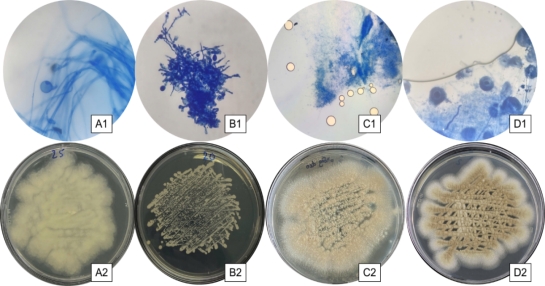
Hình 1. Hình ảnh vi thể và khuẩn lạc vi nấm được phân lập
Ghi chú: A1-A2: Mucor spp.; B1-B2: Microsporum sp.; C1-C2: Penicillium sp.; D1-D2: Aspergillus sp.
Bảng 3. Đặc điểm của vi nấm được phân lập từ quần áo đã qua sử dụng
Chi nấm | Đặc điểm khuẩn lạc | Hình thái vi thể | Quần áo người lớn | Quần áo trẻ em | Quần áo lót | Tổng số phân lập |
Mucor spp. | Bông xốp, màu trắng xám, sợi nấm vươn cao. | Sợi nấm không có vách ngăn. Bào đài hình cầu lớn. | 9/78 (11.5%) | 3/31 (9,7%) | 2/46 (4,3%) | 14/155 (9%) |
Microsporum spp. | Xốp, màu trắng xám, cạnh khuẩn lạc lan tỏa, bám chắc vào bề mặt môi trường. | Bào tử đính nhỏ, xếp nối tiếp nhau, ngăn cách bởi vách ngăn. Bào tử đính lớn. | 3/78 (3,8%) | 1/31 (3,2%) | 1/46 (2,2%) | 5/155 (3,2%) |
Aspergillus spp. | Bông xốp, nấm trưởng thành có thể chuyển màu đen hoặc vàng hoặc trắng - xám nhạt, rìa khuẩn lạc lan tỏa. | Sợi nấm có vách ngăn. Bào tử xếp xung quanh bào đài, tỏa ra hình “hoa cúc” | 5/78 (7,7%) | 2/31 (6,5%) | 0 (0%) | 7/155 (4,5%) |
Penicillium spp. | Dạng mịn, bông. Giai đoạn non có màu trắng, giai đoạn trưởng thành chuyển màu vàng nhạt. | Sợi nấm mảnh. Bào tử được sinh ra ngoài bào đài, sắp xếp thành các chuỗi dài ở đầu các bào đài. Toàn bộ cấu trúc bào tử xếp dạng chổi. | 2/78 (2,6%) | 0 | 0 | 2/155 (1,3%) |
Không mọc nấm | - | - | 59/78 (75,6%) | 27/31 (87,1%) | 44/46 (93,5%) | 130/155 (83,9%) |
Tỉ lệ mẫu phát hiện nấm là 18,1% (28/155), trong đó có 3/155 mẫu (1,9%) phân lập được 2 chi nấm trở lên (Bảng 3). Tỉ lệ vi nấm Mucor spp. được ghi nhận nhiều nhất với 9% (n = 14), tiếp theo đó là Aspergillus spp. với 4,5% (n = 7), Microsporum spp. 3,2% (n = 5) và cuối cùng là Penicillium spp. 1,3% (n = 2). Trong đó, quần áo người lớn có chứa vi nấm Mucor spp. cao nhất với 11,5% (n = 9). Kết quả này tương tự với quần áo trẻ em với 9,7% (n = 3) và 4,3% (n = 2) với quần áo lót. Không ghi nhận Aspergillus spp. trên quần áo lót và Penicillium spp. trên quần áo trẻ em, quần áo lót.
3.2. Tình trạng kháng kháng sinh của vi khuẩn được phân lập
Trong 19 mẫu ghi nhận sự xuất hiện của 20 khuẩn lạc S. aureus, kết quả kháng sinh đồ cho thấy 9 chủng kháng kháng sinh cefoxitin (MRSA), trong đó có 11 chủng nhạy cefoxitin (MSSA: Methicillin-susceptible S. aureus). Mô hình nhạy cảm kháng sinh của các chủng Staphylococcus aureus phân lập được được trình bày trong Hình 2.
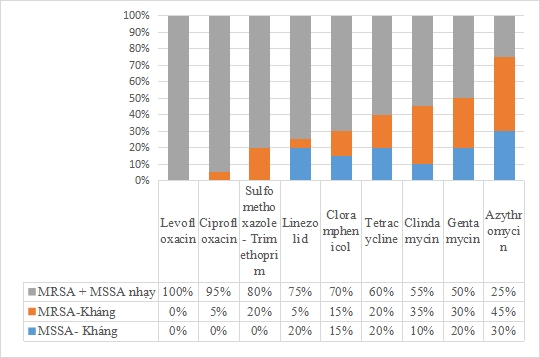
Hình 2. Phân bố mức độ kháng kháng sinh của vi khuẩn S. aureus được phân lập
Trong tổng số 20 chủng S. aureus được phân lập từ 19 mẫu quần áo, có 9 chủng được xác định là MRSA và 11 chủng là MSSA. Kết quả kháng sinh đồ cho thấy một số kháng sinh vẫn duy trì hiệu quả cao đối với các chủng phân lập, bao gồm levofloxacin (100% nhạy), ciprofloxacin (95% nhạy) và sulfamethoxazole–trimethoprim (80% nhạy), Linezoid (75%). Ngược lại, azithromycin thể hiện tỷ lệ kháng cao nhất, với 75% chủng kháng, bao gồm cả các chủng MRSA và MSSA. Gentamicin cũng cho thấy tỷ lệ kháng tương đối cao, 50% tổng số chủng được khảo sát. Các kháng sinh còn lại đều ghi nhận tỷ lệ kháng dao động từ 30% đến 45%, phản ánh mức độ đề kháng đáng lưu ý trong quần thể S. aureus phân lập từ quần áo cũ.
Bảng 4. Các kiểu hình kháng kháng sinh của vi khuẩn S. aureus
| Tên chủng | Tổng số kháng sinh thử nghiệm | Số kháng sinh kháng | MARI | Kiểu kháng kháng sinh | Vi khuẩn đa kháng |
MRSA | 107 | 9 | 8 | 0,9 | AZM/DA/TE/CN/SXT/C/LEV/LZD | MDR |
106.2 | 9 | 7 | 0,8 | AZM/DA/TE/CIP/CN/SXT/C | MDR | |
105 | 9 | 5 | 0,6 | AZM/DA/CN/SXT/C | MDR | |
145; 136 | 9 | 3 | 0,3 | AZM/ DA/ CN | MDR | |
22 | 9 | 2 | 0,2 | AZM/ SXT | MDR | |
111 | 9 | 2 | 0,2 | AZM/DA | MDR | |
106.6 | 9 | 2 | 0,2 | AZM/TE | MDR | |
96 | 9 | 4 | 0,4 | AZM/DA/CN/TE | MDR | |
MSSA | 7; 58; 63 | 9 | 4 | 0,4 | AZM/TE/CN/C | MDR |
1 | 9 | 3 | 0,3 | AZM/TE/CN | MDR | |
51; 54 | 9 | 2 | 0,2 | AZM/DA | MDR | |
120; 114; 137 | 9 | 1 | 0,1 | LZD |
| |
123 | 9 | 1 | 0,1 | LZD |
| |
133 | 9 | 0 | 0,0 |
|
|
Ghi chú: MARI: Multiple Antibiotic Resistance Index, MDR: Multidrug resistance, MRSA: Methicillin-resistant Staphylococcus aureus, MSSA: Methicillin susceptible Staphylococcus aureus, CIP: ciprofloxacin, AZM: azythtomycin, DA: clindamycin, TE: tetracycline, CN: gentamycin, SXT: sulfamethoxazole-trimethoprim, C: chloramphenicol, LEV: levofloxacin, LZD: linezolid.
Tổng số kháng sinh được sử dụng trong thử nghiệm là 9 bao gồm các kháng sinh đã kể trên và cefoxitin (Bảng 4). Đối với nhóm MRSA, số lượng kháng sinh mà các vi khuẩn thuộc nhóm này kháng dao động từ 2 đến 7 loại, chỉ số MARI dao động từ 0,2 đến 0,9. Có 6/9 chủng vi khuẩn thuộc nhóm MRSA là vi khuẩn đa kháng. Mặc khác, với nhóm MSSA, số lượng kháng sinh mà chúng kháng dao động từ 1 đến 4 loại, chỉ số MARI dao động từ 0 đến 0,4. Có 4/11 chủng vi khuẩn thuộc nhóm MSSA là vi khuẩn đa kháng.
4. THẢO LUẬN
Trong tổng số 155 mẫu khảo sát, có 107 mẫu có chứa ít nhất một tác nhân vi khuẩn hoặc nấm. Trong đó 12,3% (n = 19) mẫu phát hiện S. aureus, 56,1% (n = 87) mẫu phát hiện Bacillus spp. Tại Việt Nam, đây là khảo sát đầu tiên về vi khuẩn gây bệnh trên đối tượng quần áo đã qua sử dụng. So với các nghiên cứu khác trên thế giới, tỉ lệ S. aureus trong khảo sát thấp hơn so với khảo sát tại Pakistan (80%), chợ Lagos (60,7%) và một số khu chợ tại Makurdi, Nigeria (75%) và Bangladesh (24,4%) [1, 3, 11 và 12]. Trong khi đó, tỉ lệ Bacillus spp. cao hơn nhiều lần so với 2 khảo sát tương tự tại chợ Lagos (17,9%) và một số khu chợ ở Makurdi, Nigeria (3,5%) nhưng thấp hơn so với khảo sát tại Pakistan là 60% [1, 3 và 11] . S. aureus và Bacillus spp. thường được tìm thấy trên các bề mặt vật dụng đã qua sử dụng [13], vải [1] cũng như trong môi trường tự nhiên nhờ đặc tính chịu khô, chịu nhiệt và tồn tại lâu trong môi trường [14]. S. aureus là căn nguyên quen thuộc gây ra một số bệnh như nhiễm trùng da và mô mềm, nhiễm trùng khớp, nhiễm trùng huyết [15, 16]. Ước tính có khoảng 20–30% người khỏe mạnh mang S. aureus trong hệ vi sinh đặc biệt ở da và niêm mạc mũi mà không biểu hiện triệu chứng lâm sàng [17]. Trong khi đó Bacillus spp. là một chi gồm 273 loài với nhiều loài được biết tới rộng rãi như B. subtilis, B. clausii là các loài có lợi cho đường ruột, và các loài khác có khả năng gây bệnh như B. cereus gây ngộ độc tiêu hóa và B. anthracis gây bệnh than [18]. Các vi sinh vật này chỉ cần tồn tại với số lượng rất nhỏ nhưng vẫn có khả năng lây nhiễm cho vật chủ tiếp theo nếu chúng có thể tồn tại đủ lâu trên bề mặt để tiếp xúc với người sử dụng [19]. Tuy nhiên, trong điều kiện sinh hoạt thông thường, các căn nguyên này có thể được loại bỏ hiệu quả nếu quần áo được giặt rửa và xử lý vệ sinh đúng [4].
Ngoài vi khuẩn, khảo sát cũng ghi nhận sự hiện diện của một số vi nấm được định danh bằng kiểu hình, gợi ý tới các vi nấmAspergillus spp. (4,5%), Microsporum spp. (3,2%), Penicilium spp. (1,3%), Mucor spp. (9%). Các chi nấm này tương đối phổ biến trong đất [20], nước [21], không khí [22] và các môi trường khác. Các loài nấm này cũng được coi là các căn nguyên nhiễm trùng cơ hội, Aspergillus niger có thể gây viêm phổi trên các bệnh nhân AIDS và bệnh nhân suy giảm miễn dịch, Penicillium marneffei (Talaromyces marneffei) thường gây bệnh trên bệnh nhân AIDS, với một số biểu hiện lâm sàng như sốt, sụt cân, thiếu máu và một số triệu chứng khác. Microsporum spp. gây nấm móng và Mucor spp. có khả năng gây nhiễm trùng phổi, xoang, mô mềm [23-26]. Kết quả của khảo sát và định danh sơ bội này cho thấy Aspergillus spp., Penicillium spp. và Mucor spp. đều thấp hơn so với khảo sát tại Nigeria với tỉ lệ lần lượt là 34,3%, 5,7% và 14,3% [11]. Ngoài những chi nấm đã kể trên, một số khảo sát khác trên quần áo cũ cũng đã ghi nhận thêm các chi nấm khác như Candida spp., Rhodotorula spp., Rhizopus spp. [1, 4 và 11] .
Staphylococcus aureus hiện là một trong những vi khuẩn Gram dương gây tỷ lệ tử vong cao nhất liên quan đến tình trạng kháng kháng sinh [27]. Trong nghiên cứu này, có tới 41% (n = 9) chủng được xác định là MRSA và 75% (n = 15) các chủng khảo sát thể hiện kiểu hình đa kháng (MDR) - kháng đối với ít nhất một kháng sinh ở ≥ 3 nhóm kháng sinh khác nhau... Tỉ lệ MRSA trong khảo sát này là cao hơn so với nghiên cứu tương tự tại Bangladesh (27%), tuy nhiên tỉ lệ MDR lại thấp hơn đáng kể tại Bangladesh (100%) [12]. Tại Việt Nam, các chủng MRSA cũng được tìm thấy trên bàn tay nhân viên y tế [28], bệnh nhân bỏng tại bệnh viện Đa khoa Cần Thơ [28], bệnh nhân tại Bạc Liêu [29], Bệnh viện đa khoa Thái Nguyên [30], Đà Nẵng [31], một số bệnh viện tại Hà Nội với tỷ lệ dao động trong khoảng 50–80% [32-34]. Tuy nhiên chưa có nhiều báo cáo về MRSA trên môi trường hoặc các vật dụng đã qua sử dụng. Do đó, kết quả của nghiên cứu này cung cấp thêm bằng chứng về sự tồn tại của các chủng S. aureus kháng thuốc ngoài môi trường bệnh viện, đặc biệt trên các vật dụng có nguy cơ tiếp xúc rộng trong cộng đồng. Kết quả kháng sinh đồ trong khảo sát này cho thấy một số kháng sinh vẫn duy trì hiệu lực tốt đối với S. aureus, đặc biệt là levofloxacin (0% kháng), ciprofloxacin (5% kháng) và sulfamethoxazole–trimethoprim (19% kháng). Tỉ lệ kháng của levofloxacin thấp hơn nhiều so với nghiên cứu MRSA ở mẫu nhiễm trùng bàn tay (29,17%–60,7% kháng) [35]. Tuy nhiên, tỉ lệ kháng của các kháng sinh này thấp hơn hoặc tương đồng với nghiên cứu tại Bệnh viện Quân Y 103 trimethoprim/ sulfamethoxazole (20,0% kháng), levofloxacin, ciprofloxacin (15,0% kháng) [32] và nghiên cứu tại Bệnh viện Trung ương Quân đội 108 (ciprofloxacin-83,8% nhạy cảm, levofloxacin 86,1% nhạy cảm) [36]. Ngược lại, azithromycin ghi nhận tỷ lệ kháng cao nhất với 71% chủng kháng thấp hơn nghiên cứu tại Bệnh viện Quân Y 103 với nhóm kháng sinh Macrolide (erythromycin 81,7%) và cao hơn nghiên cứu tại Bệnh viện Trung ương Quân đội 108 (63,5%) [36]. Gentamicin cũng ghi nhận tỉ lệ kháng 50%, tỉ lệ này cao hơn nhiều so với các nghiên cứu khác chỉ ra tại Bệnh viện Quân Y 103 (16.7%) [32] nhưng thấp hơn nghiên cứu tại Bệnh viện đại học Đa Khoa Trà Vinh ( 70%) [37]. MARI là chỉ số thường được sử dụng trong các nghiên cứu vi sinh và kháng kháng sinh để đánh giá nguy cơ vi khuẩn có nguồn gốc từ môi trường hoặc khu vực có sử dụng kháng sinh thường xuyên [38]. Phân tích chỉ số đa kháng kháng sinh (MARI) cho thấy 75% các chủng S. aureus trong nghiên cứu này có giá trị MARI > 0,2, gợi ý rằng vi khuẩn có thể xuất phát từ môi trường có áp lực kháng sinh đáng kể. Sự hiện diện của plasmid mang một hoặc nhiều gen kháng thuốc có thể góp phần làm gia tăng giá trị MARI của vi khuẩn thông qua khả năng tích lũy và lan truyền các cơ chế kháng kháng sinh [39]. Do đó, giá trị MARI > 0,2 trong nghiên cứu này cho thấy một tỷ lệ đáng kể các chủng S. aureus có thể đã trải qua quá trình phơi nhiễm kéo dài với nhiều loại kháng sinh khác nhau [40]. Kết quả này gợi ý rằng phần lớn các mẫu quần áo đã qua sử dụng có thể có nguồn gốc từ các môi trường nguy cơ cao, nơi kháng sinh được sử dụng thường xuyên hoặc chưa hợp lý, qua đó tiềm ẩn nguy cơ lan truyền các vi khuẩn và gen kháng kháng sinh trong cộng đồng.
Hạn chế của nghiên cứu: Nghiên cứu còn một số hạn chế về cỡ mẫu và phạm vi thu mẫu. Nghiên cứu chỉ được khảo sát tại một khu chợ ở Hà Nội, do đó chưa phản ánh đầy đủ tình trạng nhiễm vi sinh vật trên quần áo đã qua sử dụng tại các khu vực khác. Bên cạnh đó, việc định danh vi sinh vật chỉ dựa trên đặc điểm kiểu hình chưa được khẳng định bằng PCR giải trình tự gen nên kết quả thu được ở mức định danh sơ bộ. Chúng tôi kiến nghị mở rộng phạm vi địa điểm khảo sát với cỡ mẫu lớn hơn nhằm đánh giá toàn diện hơn nguy cơ lây nhiễm vi sinh vật, đồng thời kết hợp thử nghiệm các phương pháp tiệt trùng để từ đó đưa ra các khuyến cáo phù hợp trong việc tiêu dùng quần áo đã qua sử dụng.
5. KẾT LUẬN
Trong tổng số 155 mẫu khảo sát, có 107 mẫu có chứa ít nhất một tác nhân vi khuẩn hoặc nấm. Trong đó 12,3% (n = 19) mẫu phát hiện S. aureus, 56,1% (n = 87) mẫu phát hiện Bacillus spp. Ngoài vi khuẩn, khảo sát cũng ghi nhận sự hiện diện của một số vi nấm như Aspergillus spp. (4,5%), Microsporum spp. (3,2%), Penicilium spp. (1,3%), Mucor spp. Trong 20 chủng S. aureus phân lập được, có 41% (n = 9) chủng được xác định là MRSA và 75% (n = 15) các chủng khảo sát thể hiện kiểu hình đa kháng. Qua đó cung cấp bằng chứng khoa học nền tảng cho việc để xây dựng các khuyến cáo về giặt, xử lý quần áo đã qua sử dụng trước khi đưa vào tiêu dùng trong cộng đồng sử dụng.
Lời cảm ơn: Tác giả xin chân thành bày tỏ lòng biết ơn sâu sắc đến ThS. Ma Thị Huyền - người đã tận tình hướng dẫn, cung cấp lời khuyên chuyên môn quý báu và tạo mọi điều kiện thuận lợi để nghiên cứu được hoàn thành. Sự động viên và khích lệ của Cô là nguồn cảm hứng lớn nhất trong suốt quá trình thực hiện nghiên cứu. Chúng tôi cũng xin gửi lời cảm ơn chân thành đến Trường Đại học Y Hà Nội đã hỗ trợ một phần kinh phí và Khoa Kỹ thuật Y học - Trường Đại học Y Hà Nội đã tạo điều kiện về mặt cơ sở vật chất, cho phép chúng tôi tiếp cận dữ liệu, thiết bị cần thiết cho nghiên cứu.
Tuyên bố về sử dụng GenAI: Các tác giả xin khẳng định rằng không sử dụng bất kì công cụ Trí tuệ Nhân tạo tạo sinh (GenAI) nào để tạo ra hoặc chỉnh sửa nội dung khoa học cốt lõi của bản thảo này. Mọi phân tích, diễn giải, kết luận trình bày trong bài viết đều là sản phẩm độc lập của các tác giả.
Tuyên bố về đóng góp của tác giả: Mai Thùy Linh: Xây dựng phương pháp nghiên cứu, nghiên cứu, xử lý số liệu, viết bản thảo gốc; Trần Thị Hà An, Bùi Minh Ngọc: Nghiên cứu; Ma Thị Huyền: Đề xuất ý tưởng, xây dựng phương pháp nghiên cứu, chỉnh sửa bản thảo.
Tuyên bố về xung đột lợi ích: Các tác giả cam đoan rằng không có bất kỳ xung đột lợi ích nào liên quan đến nghiên cứu, tài trợ hoặc xuất bản bài báo này. Trường Đại học Y Hà Nội đóng vai trò là đơn vị cấp một phần kinh phí và không tham gia vào quá trình thiết kế nghiên cứu, thu thập và phân tích dữ liệu hoặc quyết định công bố bài báo này.
Tài liệu tham khảo
- J. Atubu, G. Gberikon, and C. Agbulu, Microbial analysis of second hand children socks sold in some selected markets in Makurdi Metropolis, Nigeria, Journal of Applied Life Sciences International, Vol. 6, No. 4, pp. 1–8, Jan. 2016. DOI: 10.9734/JALSI/2016/26754
- A. RARakhshanpour, A. Aghahossein Shirazy, R. Shafiei, and M. T. Rahimi, Second-hand clothe, a new threat for acquiring parasitic infection, Iran J Public Health, Vol. 50, No. 1, pp. 211–212, Jan. 2021. DOI: 10.18502/ijph.v50i1.5093
- A. Jadoon et al., Isolation and identification of potentially pathogenic bacteria from second hand items of Flea Market of district Haripur, Pakistan, NVEO - Natural Voilatiles & Essential Oils Journal, Vol. 9, No. 1, pp. 1067–1076, Mar. 2022.
- N. A. F. Al-Easawi and F. K. Emran, A microbial survey of second hand clothe samples collected from Baghdad market, Al-Nahrain Journal of Science, Vol. 20, No. 3, pp. 127–136, 2017. DOI: 10.22401/JNUS.20.3.19
- Y. M. Muthiani, V. N. Matiru, and C. Bii, Potential skin pathogens on second hand clothes and the effectiveness of disinfection methods, Kenya, November 17-19, 2010. Kenya, JKUAT, 2017.
- C. De Liberato et al., Report of the human body louse (Pediculus humanus) from clothes sold in a market in central Italy, Parasites Vectors, Vol. 12, No. 1, pp. 201, Dec. 2019. DOI: 10.1186/s13071-019-3458-z
- A. Kanwar, J. Cadnum, M. Thakur, A. Jencson, and C. Donskey, Contaminated clothing of methicillin-resistant Staphylococcus aureus (MRSA) carriers is a potential source of transmission, American Journal of Infection Control, Vol. 46, June 2018. DOI: 10.1016/j.ajic.2018.06.002
- Jan Hudzicki, Kirby-Bauer disk diffusion susceptibility test protocol, Jan. 2009. [Online]. Available: https://asm.org/protocols/kirby-bauer-disk-diffusion-susceptibility-test-pro. [Accessed Jan. 8, 2026]
- A-P. Magiorakos et al., Multidrug-resistant, extensively drug-resistant and pandrug-resistant bacteria: an international expert proposal for interim standard definitions for acquired resistance, Clinical Microbiology and Infection, Vol. 18, No. 3, pp. 268–281, Mar. 2012. DOI: 10.1111/j.1469-0691.2011.03570.x
- O. O. Osundiya, R. O. Oladele, and O. O. Oduyebo, Multiple Antibiotic Resistance (MAR) indices of Pseudomonas and Klebsiella species isolates in Lagos University Teaching Hospital, African Journal of Clinical and Experimental Microbiology, Vol. 14, No. 3, pp. 164–168, Aug. 2013. DOI: 10.4314/ajcem.v14i3.8
- F. A. Olajubu, V. T. Folorunso, and O. Olojede, The microbial diversity of fairly used wears sold in a Lagos Market, Nigeria, IOSR Journal of Pharmacy and Biological Sciences, Vol. 12, No. 02, pp. 63–68, Feb. 2017. DOI: 10.9790/3008-1202046368
- Sumi Akter et al., Prevalence of multidrug resistance Staphylococcus aureus isolated from secondhand items in Dhaka, Bangladesh, Journal of Biological Studies. Vol. 7, No. 4, pp. 214–226, 2025. DOI: 10.62400/jbs.v7i4.11539 11
- A. N. Neely, M. P. Maley, Survival of Enterococci and Staphylococci on hospital fabrics and plastic, Journal of Clinical Microbiology, Vol. 38, No. 2, pp. 724–726, Feb. 2000. DOI: 10.1128/jcm.38.2.724-726.2000
- T. J. Ravine, P. S. Brewer, S. E. Bru, and S. Tyler, Sampling of patient radiation therapy thermoplastic immobilization forms reveals several types of attached bacteria, Journal of Medical Imaging and Radiation Sciences, Vol. 51, No. 1, pp. 117–127, Mar. 2020. DOI: 10.1016/j.jmir.2019.12.001
- L. Draaijers, R.-J. Hassing, M. Kooistra, K. van Kessel, and M. Hovens, Severe acquired coagulopathy during fulminant Staphylococcus aureus sepsis most likely caused by S. aureus exotoxins (SSLs), Eur J Case Rep Intern Med, Vol. 5, No. 12, pp. 0001-0002, Dec. 2018. DOI: 10.12890/2018_0001002
- Steven Y. C. Tong, Joshua S. Davis, Emily Eichenberger, Thomas L. Holland and Vance G. Fowler Jr, Staphylococcus aureus infections: Epidemiology, pathophysiology, clinical manifestations, and management, Clinical Microbiology Reviews. Vol.28, No 3, pp. 603-661, 2015, DOI:10.1128/CMR.00134-14
- R. J. Gorwitz et al., Changes in the prevalence of nasal colonization with Staphylococcus aureus in the United States, 2001–2004, The Journal of infectious diseases, Vol. 197, No. 9, pp. 1226–1234, May 2008. DOI: 10.1086/533494
- Rainer Borris, Bacillus in Beneficial microbes in agroecology, Academic Press, pp. 107–132, 2020. DOI: 10.1016/B978-0-12-823414-3.00007-1
- A. Kramer, O. Assadian, Survival of microorganisms on inanimate surfaces in Use of biocidal surfaces for reduction of healthcare acquired infections, G. Borkow, editor. Cham, Springer International Publishing, 2014, pp. 7–26 . DOI: 10.1007/978-3-319-08057-4_2
- Maren A. Klich, Biogeography of Aspergillus species in soil and litter, Mycologia, Vol. 94, No. 1, pp. 21-27 2022. DOI: 10.1080/15572536.2003.11833245
- Micael F. M. Goncalves et al., Biodiversity of Penicillium species from marine environments in Portugal and description of Penicillium lusitanum sp. nov., a novel species isolated from sea water, Microbiology Society, Vol 69, No. 10, pp. 3014-3021, Oct. 2019. DOI: 10.1099/ijsem.0.003535
- A. Ozkutuk et al., The relationship between moulds isolated from indoor air and features of the house environment, Indoor and Built Environment, Vol. 17, No. 3, pp. 269–273, June 2008. DOI: 10.1177/1420326X08091958
- A. K. Person, S. M. Chudgar, B. L. Norton, B. C. Tong, and J. E. Stout, Aspergillus niger: an unusual cause of invasive pulmonary aspergillosis, Journal of Medical Microbiology, Vol. 59, No. 7, pp. 834–838, 2010. DOI: 10.1099/jmm.0.018309-0
- Y. Hu et al., Penicillium marneffei Infection: an emerging disease in Mainland China, Mycopathologia, Vol. 175, No. 1, pp. 57–67, Feb. 2013. DOI: 10.1007/s11046-012-9577-0
- Erick Martinez, Mahreen Ameen, Diana Tejada and Roberto Arenas, Microsporum spp. onychomycosis: disease presentation, risk factors and treatment responses in an urban population Microsporum spp. onychomycosis: disease presentation, risk factors and treatment responses in an urban population, The Brazilian Journal of Infectious Diseases, Vol 18, No. 2, pp. 181-186, Apr. 2014. DOI: 10.1016/j.bjid.2013.08.005
- R. R. M. Paterson, N. Lima, Filamentous fungal human pathogens from food emphasising aspergillus, fusarium and mucor, Microorganisms, Vol. 5, No. 3, pp. 44, Sept. 2017. DOI: 10.3390/microorganisms5030044
- L. B. Rice, Antimicrobial resistance in gram-positive bacteria, American Journal of Infection Control, Vol. 34, No. 5, Supplement, pp. S11–S19, June 2006. DOI: 10.1016/j.ajic.2006.05.220
- Trương Hoài Phong, Lê Nguyễn Ngọc Thùy và Trần Đình Bình, Đánh giá các phương pháp phát hiện Staphylococcus aureus kháng methicillin tại Bệnh viện Đa khoa Thành phố Cần Thơ, Tạp chí Y học Việt Nam, tập 543, số 1, tr. 244-249, 2024. DOI: 10.51298/vmj.v543i1.11338
- Bùi Phát Đạt, Lê Văn Chương, Ngô Quốc Đạt, Hồ Ngọc Hương và Huỳnh Minh Tuấn, Khảo sát tỉ lệ Staphylococcus aureus đề kháng methicillin (MRSA) và hiệu quả phối hợp kháng sinh vancomycin với cefepime/gentamycin trên các chủng MRSA phân lập tại Bệnh viện Đa khoa Bạc Liêu, Tạp chí Y học Việt Nam, tập 508, số 2, tr. 305-308, 2021. DOI: 10.51298/vmj.v508i2.1657
- Nguyễn Thị Thu Thái, Lương Thị Hồng Nhung và Nguyễn Thị Huyền, Nghiên cứu sự phân bố của các chủng S. aureus kháng methicillin (MRSA) và nồng độ ức chế tối thiểu của vancomycin đối với các chủng MRSA phân lập tại Bệnh viện Trung ương Thái Nguyên, Tạp chí Y học Việt Nam, tập 501, số 1, tr. 203-207, 2021, DOI: 10.51298/vmj.v501i1.464
- Nguyễn Huy Hoàng, Nguyễn Thị Đoan Trinh, Hoàng Thị Minh Hòa, Trương Đình Anh Sơn và Phan Thị Huyền Diệu, Khảo sát nồng độ ức chế tối thiểu của vancomycin đối với các chủng Staphylococcus aureus kháng methicillin được phân lập được tại Bệnh viện C Đà Nẵng, Tạp chí Y học Cộng đồng, tập 65, số CĐ 12-Bệnh viện Thủ Đức, tr. 131-137, 2024. DOI: 10.52163/yhc.v65iCD12.1831
- Nguyễn Văn An, Lê Hạ Long Hải, Tình hình kháng kháng sinh của các chủng Staphylococcus aureus gây nhiễm khuẩn vết thương tại Bệnh viện Quân y 103 năm 2022, Tạp chí Y học Việt Nam, tập 543, số 2, tr. 56-59, 2024. DOI: 10.51298/vmj.v543i2.1139731
- Nguyễn Thị Hương, Trần Huyền Trang và Nguyễn Văn Hùng, Nhận xét tình trạng nhiễm khuẩn khớp và phần mềm cạnh khớp tại khoa Cơ xương khớp - Bệnh viện Bạch Mai giai đoạn 2020-2021, VMJ, tập 506, số 2, tr. 142-147, 2021. DOI: 10.51298/vmj.v506i2.1260
- Nguyễn Văn An, Nguyễn Văn Đức và Lê Hạ Long Hải, Thực trạng kháng kháng sinh của các chủng Staphylococcus aureus phân lập được tại Bệnh viện Đa khoa Tâm Anh năm 2023, Tạp chí Y học Việt Nam, tập 548, số 1, tr. 139-142, 2025, DOI: 10.51298/vmj.v548i1.13312
- Huỳnh Thị Linh Thu, Nguyễn Thế Tuân, Phan Anh Tuấn và Vũ Huy Thạnh, Đánh giá tỉ lệ nhiễm MRSA và xu hướng kháng sinh trong nhiễm trùng bàn tay tại Bệnh viện Chấn thương Chỉnh hình từ năm 2019-2023, Tạp chí Y học cộng đồng, tập 65, số 1, tr. 222-230, 2024. DOI: 10.52163/yhc.v65iCD1.989
- Đỗ Văn Đông, Nguyễn Sĩ Thấu và Vũ Viết Sáng, Đặc điểm lâm sàng, cận lâm sàng và tính kháng kháng sinh ở bệnh nhân nhiễm khuẩn huyết do Staphylococcus aureus điều trị tại Bệnh viện Trung ương Quân đội 108 từ năm 2016 đến năm 2018, Tạp chí Y dược lâm sàng 108, tập 14, số 4, tr. 146-152, 2019.
- Nguyễn Thị Kim Vân, Nguyễn Thị Huỳnh Như, Tỉ lệ đề kháng kháng sinh của Staphylococcus aureus và Escherichia Coli tại Bệnh viện Trường Đại học Trà Vinh, Tạp chí Y học Việt Nam, tập 538, số 3, tr. 143-147, 2024. DOI: 10.51298/vmj.v538i3.959736
- M. P. Chitanand, T. A. Kadam, G. Gyananath, N. D. Totewad, and D. K. Balhal, Multiple antibiotic resistance indexing of coliforms to identify high risk contamination sites in aquatic environment, Indian journal of microbiology, Vol. 50, No. 2, pp. 216–220, June 2010. DOI: 10.1007/s12088-010-0042-9
- Fabian Svara, Daniel J. Rankin, The evolution of plasmid-carried antibiotic resistance, BMC evolutionary biology, Vol. 11, Article number 130, 19 May 2011. DOI:10.1186/1471-2148-11-130
- M. M. J. Arsene et al., Prolonged exposure to antimicrobials induces changes in susceptibility to antibiotics, biofilm formation and pathogenicity in Staphylococcus aureus, Journal of Pharmaceutical Research International, Vol. 33, No. JRPI 70505, pp. 140–151, July 2021. DOI: 10.9734/jpri/2021/v33i34B31856